The Lagos Tech Ecosystem: A Guide to Landing a Job in Yaba
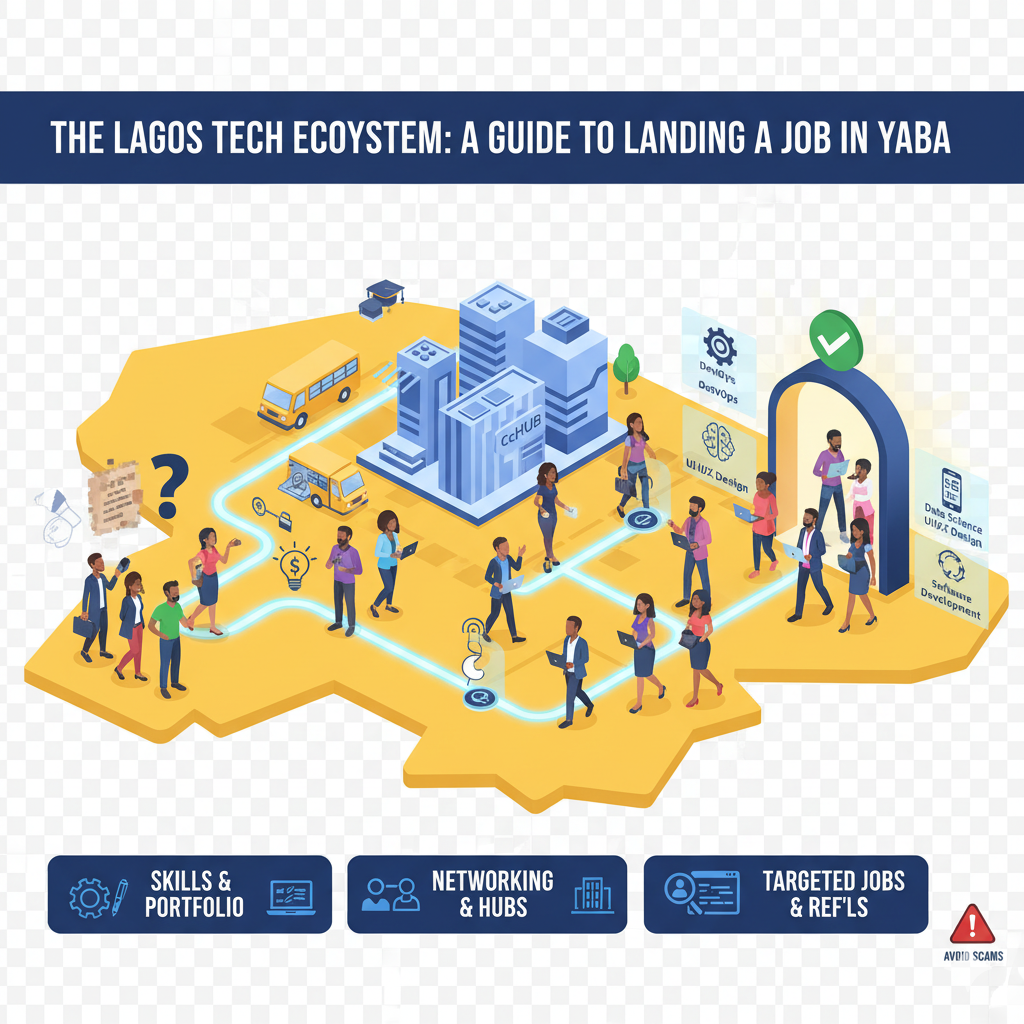
In the sprawling, energetic metropolis of Lagos, amidst the constant hum of yellow danfo buses and the relentless hustle of its twenty million inhabitants, a different kind of energy emanates from a district known as Yaba. To the uninitiated, it’s just another busy part of the Lagos mainland. But to those in the know, Yaba is the pulsating heart of Nigeria’s technology revolution. It is “Yabacon Valley,” the undisputed epicenter of an ecosystem teeming with ambitious startups, innovative hubs, and some of the brightest minds on the continent.
The rise of Yaba as a tech hub was no accident. Its strategic location, nestled between the prestigious University of Lagos and the Yaba College of Technology, created a natural pipeline of fresh talent. Early pioneers like the Co-Creation Hub (CcHUB) set up shop here, fostering a community and providing the critical infrastructure for fledgling ideas to grow into viable businesses. Today, Yaba is more than just a cluster of office buildings; it’s a symbol of aspiration for a new generation of Nigerian professionals. It represents a departure from traditional corporate career paths into a world of innovation, problem-solving, and global impact.
Landing a job in Yaba has become a coveted goal for tech enthusiasts across the country. But navigating this dynamic and often insular ecosystem requires more than just a good CV. It demands a specific blend of skills, a strategic approach to networking, and a deep understanding of the local tech culture. This guide will provide you with a realistic, actionable roadmap to break into the Lagos tech scene and land your dream job in Yaba.
Understanding the Yaba Landscape: More Than Just a Location
Before you can conquer Yaba, you must understand its key components. The ecosystem is a symbiotic relationship between different players, each contributing to its vibrancy and growth.
The Startups: This is the lifeblood of Yaba. While some of the early giants like Paystack and Andela have either been acquired or gone remote-first, their legacy and DNA permeate the area. Yaba is still home to hundreds of startups in various stages, from bootstrapped two-person teams working out of a hub to well-funded scale-ups in fintech, healthtech, edtech, and logistics. The environment is in constant flux, with new companies emerging all the time.
The Hubs and Incubators: These are the ecosystem’s community centers and kingmakers. CcHUB remains a central pillar, providing co-working spaces, incubation programs, and a constant stream of events. Other hubs and accelerators have also made their mark, offering support, mentorship, and funding to early-stage startups. These hubs are not just workspaces; they are crucial networking points.
The Investors: The presence of local and international Venture Capital (VC) firms has fueled Yaba’s growth. While they may not have flashy offices, their influence is felt everywhere. A startup securing a new round of funding often means a hiring spree is imminent. Keeping an eye on funding announcements from publications like TechCabal and Techpoint Africa is a smart way to identify growing companies.
The Educational Institutions: The proximity of UNILAG and Yabatech cannot be overstated. They provide a steady stream of raw talent, interns, and ambitious graduates. Many startups actively collaborate with these institutions, running hackathons and workshops to spot and recruit the best students before they even graduate.
The culture in Yaba is a stark contrast to the traditional corporate world of Victoria Island or Ikoyi. Expect open-plan offices, casual dress codes (jeans and t-shirts are the norm), collaborative work environments, and a palpable sense of urgency. It’s a culture built on innovation, meritocracy, and the quintessential Lagos “hustle.”
The In-Demand Roles: What Yaba Companies are Hiring For
The term “tech job” is often misunderstood as being exclusively about coding. In reality, a successful tech company is like a multi-faceted team, requiring a wide range of skills to build, market, and support its products. Here are some of the most sought-after roles in the Yaba ecosystem.
Technical Roles
These are the builders and maintainers of the technology itself.
- Software Development: The demand for skilled developers is insatiable. This includes Frontend (building what the user sees, often with JavaScript frameworks like React or Vue), Backend (managing the server-side logic and database, with languages like Python/Django, Node.js, or PHP/Laravel), and Mobile (developing for Android with Kotlin or iOS with Swift).
- DevOps and Cloud Engineering: As companies scale, they need engineers who can manage and automate their cloud infrastructure on platforms like AWS, Google Cloud, or Azure.
- Data Science and Analytics: Companies are collecting vast amounts of data. They need professionals who can interpret this data to make smarter business decisions, build recommendation engines, and predict user behavior.
Product Roles
These roles sit at the intersection of business, technology, and user experience.
- Product Management: Product Managers are the “mini-CEOs” of a product. They define the product vision, decide what features to build, and work with developers and designers to bring it to life.
- UI/UX Design: User Interface (UI) and User Experience (UX) Designers are responsible for making products visually appealing, intuitive, and easy to use. In a competitive market, good design is a key differentiator.
Growth and Marketing Roles
These professionals are responsible for getting the product into the hands of users.
- Digital Marketing: This is a broad field that includes Search Engine Optimization (SEO), Content Marketing, Social Media Marketing, and Paid Advertising (PPC). Tech companies need marketers who are data-driven and understand the digital landscape.
- Growth Marketing: This is a more specialized, experiment-driven approach to marketing focused on rapidly growing a user base through innovative tactics.
The Essential Skillset: What You Actually Need to Get Hired
In Yaba, what you can do matters far more than the certificate you hold. Companies want to see practical, demonstrated ability.
Hard Skills with Proof
Your CV is a claim; your portfolio is the evidence. This is non-negotiable.
- For Developers: Your GitHub profile is your most important asset. It should be active and feature personal projects that showcase your ability to build real things. A link to your GitHub should be at the top of your CV.
- For Designers: A polished portfolio on Behance, Dribbble, or a personal website is mandatory. It should feature case studies that explain your design process, not just final, pretty pictures.
- For Marketers: Show results. This could be a blog you grew, a social media account you managed, or case studies (with metrics) of campaigns you have run. Certifications from Google or HubSpot are good, but they must be backed by practical experience.
The “Yabacon Valley” Soft Skills
The fast-paced, often chaotic nature of startup life requires a specific set of personal attributes.
- Extreme Problem-Solving: You need to be able to think on your feet and devise solutions with limited resources. The answer won’t always be in a textbook.
- Adaptability: Startups pivot. Your job description today might not be your job description in six months. You must be comfortable with change and ambiguity.
- Collaboration: You will be working in cross-functional teams. You must be able to communicate your ideas clearly to people with different skill sets and be open to feedback.
- Grit and Resilience: Working in a Lagos startup is not for the faint of heart. The pressure is high, deadlines are tight, and things will break. You need the mental toughness to push through challenges.
The Strategy: Your Action Plan for Landing a Job
A passive approach of simply applying online is unlikely to yield results. You need to be proactive and strategic.
Step 1: Immerse Yourself in the Ecosystem (Digitally First)
Before you set foot in Yaba, you should be a part of the online conversation. Follow Yaba-based startups, their founders, and key tech personalities on Twitter and LinkedIn. Read TechCabal and Techpoint Africa daily to stay updated on funding news and trends. Join online communities for Nigerian tech professionals like Devcenter Square on Slack.
Step 2: Show Up and Network Authentically
The Yaba ecosystem thrives on personal connections. The most valuable networking happens in person. Make it a point to attend industry events, meetups, and workshops, many of which are hosted by CcHUB and other hubs. When you attend, your goal isn’t to hand out CVs; it’s to have genuine conversations, learn from others, and build relationships. Don’t ask for a job. Ask for advice. People are more willing to help someone who is curious and eager to learn.
Step 3: Craft a Tech-Centric CV and Portfolio
Your CV should be a one-page document that is heavy on impact and metrics. Instead of listing duties like “Wrote code for the company website,” use results-oriented language like “Re-engineered the checkout process, resulting in a 15% reduction in cart abandonment.” As mentioned, links to your portfolio (GitHub, Behance, etc.) must be prominent.
Step 4: Target Your Applications and Leverage Referrals
While general job boards are useful, many of the best jobs are posted directly on the career pages of startup websites. Make a list of 20-30 Yaba companies you admire and check their sites regularly. More importantly, leverage the network you’ve started building. A warm referral from a current employee is the single most effective way to get your CV noticed. A simple message to a connection like, “Hi [Name], I saw that [Company] is hiring for a [Role]. Your work there seems really exciting. Would you be open to a brief chat about your experience at the company?” can open doors.
The Reality of Working in Yaba
It’s important to have a realistic view of what working in Yaba entails. The commute can be grueling, with the infamous Lagos traffic being a daily challenge. The work environment is fast-paced and can be high-pressure, especially around product launches. Work-life balance can sometimes be a struggle. However, the trade-offs are immense. You get to work on solving meaningful problems, surrounded by incredibly smart and driven people. The learning opportunities are unparalleled, and your career can grow at a much faster rate than in a traditional corporate setting.
Conclusion: Become a Builder, Not Just a Job Seeker
Landing a job in the Yaba tech ecosystem is less about having the right certificate and more about demonstrating what you can build, create, and contribute. It’s about becoming an active participant in the community, not just an observer. Start by building projects that solve a small problem you care about. Start sharing what you’re learning on a blog or on social media. Start attending meetups and having conversations.
Yaba is looking for builders, problem-solvers, and collaborators. By focusing on developing and showcasing these attributes, you will not only land a job in Africa’s most exciting tech hub—you will become a valuable part of its future.