From NYSC to Management: A 5-Year Career Roadmap for Ambitious Graduates
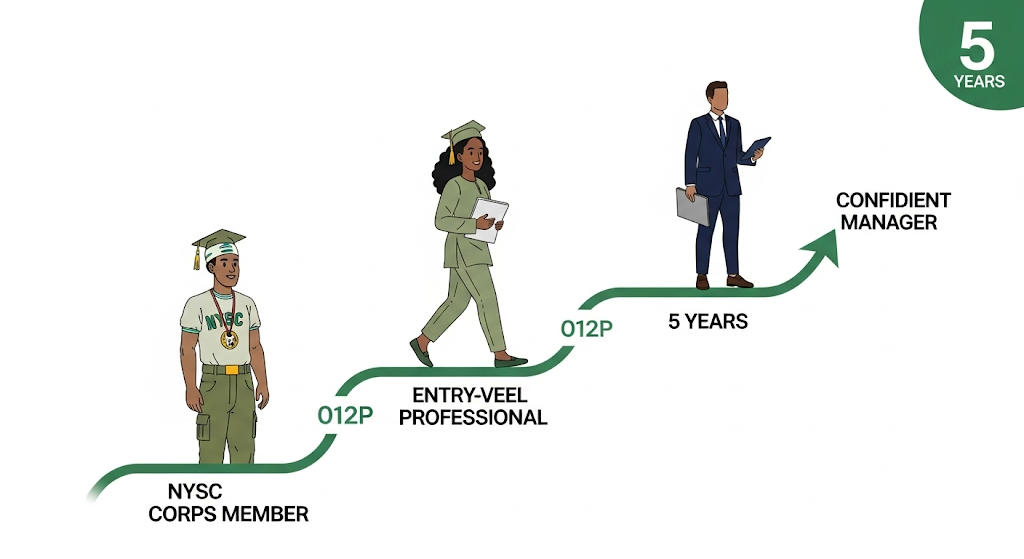
The Passing Out Parade is over. You’ve tossed your khaki cap in the air, taken the last picture with your fellow corps members, and collected your discharge certificate. A chapter of your life, filled with both excitement and uncertainty, has officially closed. Now, the most pressing question echoes in your mind: “What next?” For the ambitious Nigerian graduate, the end of the National Youth Service Corps (NYSC) is not an end, but the true beginning of a race—a race towards building a meaningful, impactful, and lucrative career.
The dream for many is to not just get a job, but to climb the corporate ladder, moving from an entry-level position to a management role where you can lead teams, make strategic decisions, and significantly increase your earning potential. But in the highly competitive and often unstructured Nigerian job market, ambition alone is not enough. Hope is not a strategy. A swift ascent to management doesn’t happen by accident; it happens by design. It requires a deliberate, strategic, and disciplined approach from day one.
This is your roadmap. Forget wandering aimlessly through your early career. This guide will provide a structured, year-by-year plan to help you navigate the crucial first five years after NYSC. It will show you how to leverage each stage to acquire the skills, gain the visibility, and build the reputation necessary to transition from a fresh-faced graduate into a management-ready professional. This is your blueprint for turning ambition into achievement.
The Foundation: The NYSC Year (Year 0)
Many see the NYSC year as a mandatory waiting period before real life begins. Ambitious graduates see it as a strategic head start. Do not waste this year. Your approach to your service year can set the foundation for your entire career.
The Theme: Exploration and Skill Acquisition
Your Goals:
- Excel at Your PPA (Place of Primary Assignment): Whatever you are assigned to do, do it with excellence. Whether you’re teaching in a school or working in a government ministry, build a reputation as the most reliable and hardworking corps member. This is your first professional reference.
- Seek Relevant Experience: If your PPA is not aligned with your desired career path, you must be proactive. Volunteer your weekends for an NGO, offer your services to a local small business, or start a personal project. If you want to go into marketing, start a blog and grow its audience. If you want to be a developer, build a simple app. Document this experience.
- Start Learning a High-Demand Skill: This is non-negotiable. Use your free time to take an online course. Focus on skills that are in high demand in Nigeria: Digital Marketing, Data Analysis (with Excel and Power BI), UI/UX Design fundamentals, or a programming language like Python. Platforms like Coursera, Udemy, and YouTube are your best friends.
- Build Your Initial Network: Connect with your superiors and impressive colleagues at your PPA on LinkedIn. These are the first senior professionals in your network.
Year 1: The Sponge – Master Your Entry-Level Role
You’ve landed your first post-NYSC job. Congratulations. Your primary objective for this entire year is to absorb as much information as possible and become impeccably reliable.
The Theme: Learn Everything
Your Goals:
- Become a Master of Execution: Your boss should see you as the safest pair of hands on the team. When a task is given to you, it gets done perfectly and on time. Pay meticulous attention to detail. Double-check your work. Be the first to arrive and the last to leave if necessary.
- Ask Intelligent Questions: Don’t just do what you’re told; understand why you’re doing it. Ask questions that show you are thinking about the bigger picture, such as, “I’ve finished the report. Could you help me understand how this data is used by the sales team?”
- Find a Mentor: Identify a high-performing senior colleague or manager (not necessarily your direct boss) who you admire. Observe how they work, how they communicate, and how they navigate office politics. Politely ask them for a 15-minute chat to ask for their advice on navigating your early career.
- Understand the Business Model: Learn how your company makes money. What are its products or services? Who are its customers and competitors? Understanding the commercial aspects of the business is a key differentiator.
Year 2: The Contributor – Add Your Unique Value
You’ve learned the ropes. Now it’s time to move from being a passive learner to an active contributor. This is the year you start to build your personal brand within the organization.
The Theme: From Learning to Improving
Your Goals:
- Develop a “Spike”: Become the unofficial “go-to” person for one specific thing on your team. This could be anything from being the wizard at creating PowerPoint presentations to being the one who best understands a new piece of software. This “spike” is your first area of recognized expertise.
- Propose, Don’t Complain: Every office has inefficient processes. Instead of just complaining about them during lunch, document the problem and propose a simple, well-thought-out solution to your boss. Even if it’s not implemented, it shows you are a proactive problem-solver.
- Get Your First Professional Certification: Now is the time to formalize the skills you’ve been learning. Earn a foundational, globally recognized certification in your field. This could be a Google Analytics certification, an entry-level HR (aPHRi) cert, or a Certified Associate in Project Management (CAPM). It’s an external validation of your competence.
- Build Cross-Functional Relationships: Make friends in other departments (Finance, Marketing, Operations). This helps you understand the entire business and builds your internal network.
Year 3: The Emerging Leader – Gain Visibility
You are now a reliable and valued member of the team. This is the year to start demonstrating leadership potential, even without a formal title.
The Theme: Leading Without Authority
Your Goals:
- Take Ownership of a Project: Volunteer to lead a small, low-risk project or take responsibility for a significant workstream within a larger project. This is your first opportunity to manage timelines, coordinate with others, and be accountable for an outcome.
- Hone Your Communication Skills: This is a critical management skill. Volunteer to present your team’s findings in a meeting. Practice writing clear, concise, and professional emails. Learn to articulate your ideas persuasively.
- Mentor a New Hire or Intern: When a new person joins the team, offer to show them the ropes. Helping someone else succeed is one of the clearest signs of leadership potential. It shows you are a team player who invests in others.
- Deepen Your Expertise: Your credibility as a leader is built on your competence. Focus on becoming a true subject matter expert in your niche. You could start preparing for a more advanced certification (like the PMP).
Year 4: The Strategist – Think Like a Manager
At this stage, you need to show that you can think beyond your immediate tasks and understand the strategic goals of the business. You need to start seeing the world through your manager’s eyes.
The Theme: From Tactics to Strategy
Your Goals:
- Understand Your Team’s KPIs: What are the Key Performance Indicators that your manager reports on? How is your team’s success measured? Once you understand these, you can start proactively contributing ideas and work that directly impacts these metrics.
- Develop Commercial Acumen: Start paying attention to budgets, costs, and revenue related to your team’s work. When you propose an idea, think about its financial implications. This demonstrates a mature, business-oriented mindset.
- Have “The Career Conversation”: Schedule a formal meeting with your manager to discuss your career path. Be explicit about your ambitions. Ask directly: “I am very interested in growing into a leadership role within this company. Could you help me understand what skills and experiences I need to build over the next year to be considered a strong candidate for a Team Lead or Junior Manager position?” This conversation is vital.
- Network with Senior Leadership: Build on your cross-functional relationships and start building visibility with your boss’s boss and other senior leaders. Find opportunities to interact with them and briefly showcase your work or insights.
Year 5: The Ascent – Securing Your First Management Role
This is the culmination of your hard work. You have the skills, the experience, and the reputation. Now it’s time to actively pursue your first leadership role.
The Theme: Making the Leap
Your Goals:
- Look for Internal Opportunities First: The easiest transition into management is often within your current company. You have the advantage of institutional knowledge, a proven track record, and a network of advocates. Keep an eye on internal job postings and make your ambitions known.
- Reframe Your CV for Leadership: Your CV should no longer read like a junior employee’s. Rewrite your bullet points to highlight leadership, project management, mentorship, and strategic contributions. For example, change “Prepared monthly reports” to “Led the monthly performance reporting process, improving data accuracy by 25%.”
- Prepare for Management Interviews: The questions will be different. Be ready to answer questions about your leadership style, how you would handle underperforming team members, how you motivate a team, and how you would handle conflicts.
- Be Open to an External Move: If there are no clear growth paths in your current company, it’s time to look outside. With four solid years of achievement-oriented experience, a professional certification, and demonstrated leadership potential, you are now a very attractive candidate for a “Team Lead” or “Junior Manager” role at another company.
Conclusion: Your Career is a Project You Manage
The journey from a fresh NYSC graduate to a manager in five years is not a myth. It is an achievable goal for those who approach their career with the discipline and strategic foresight of a project manager. This roadmap is not a rigid set of rules but a flexible framework for deliberate action. Each year builds upon the last, transforming you from a raw but ambitious graduate into a competent and confident professional, ready to lead. Your career is the most important project you will ever manage. Take ownership of it, execute your plan with excellence, and build the future you deserve.