How to Spot a Fake Job Interview and Avoid Scammers in Nigeria
The Nigerian job market is a place of immense hope and relentless competition. For every legitimate opportunity that arises in Lagos, Abuja, Port Harcourt, or beyond, there are countless individuals eager to secure employment. Unfortunately, this fertile ground for ambition is also a breeding ground for scammers. Job scams are a pervasive and heartbreaking reality in Nigeria, preying on the desperation and optimism of job seekers. These fraudsters evolve their tactics constantly, making it increasingly difficult to differentiate between a genuine opportunity and a well-orchestrated trap.
Falling victim to a job scam can be devastating, leading to financial loss, wasted time, emotional distress, and even identity theft. Imagine investing your last Naira for transport to a supposed interview, only to find an empty building. Or worse, paying a “processing fee” for a job that never existed. This isn’t just about losing money; it’s about losing trust and faith in a system that’s already challenging enough to navigate. In a country where joblessness is a significant issue, these scams exploit vulnerability and compound hardship.
However, armed with the right knowledge and a healthy dose of skepticism, you can protect yourself. This comprehensive guide is designed to empower Nigerian job seekers with the tools to identify the red flags of fake job interviews and avoid falling prey to common scams. We will walk you through the tell-tale signs, common scammer tactics, and best practices to ensure your job search journey is safe, secure, and ultimately successful.
The Scammer’s Playbook: Common Tactics Used in Nigeria
Understanding how scammers operate is the first line of defense. They often follow a predictable pattern, regardless of the specific details of the fake job.
- The “Too Good to Be True” Offer: This is the most common bait. The salary is astronomically high for the role and your experience level, the benefits are extravagant, and the job description is vague but promises quick advancement and minimal effort. If it sounds unbelievably perfect, it almost certainly is.
- The Rush and Pressure Tactic: Scammers want you to act quickly before you have time to think or research. They’ll create a false sense of urgency, claiming the position needs to be filled “immediately” or that there are “only a few spots left.”
- The “Remote” or “International” Lure: Many scams originate or claim to be from international companies, offering jobs that can be done remotely from Nigeria or promising relocation. This adds a layer of glamour and makes it harder to verify the company’s physical existence.
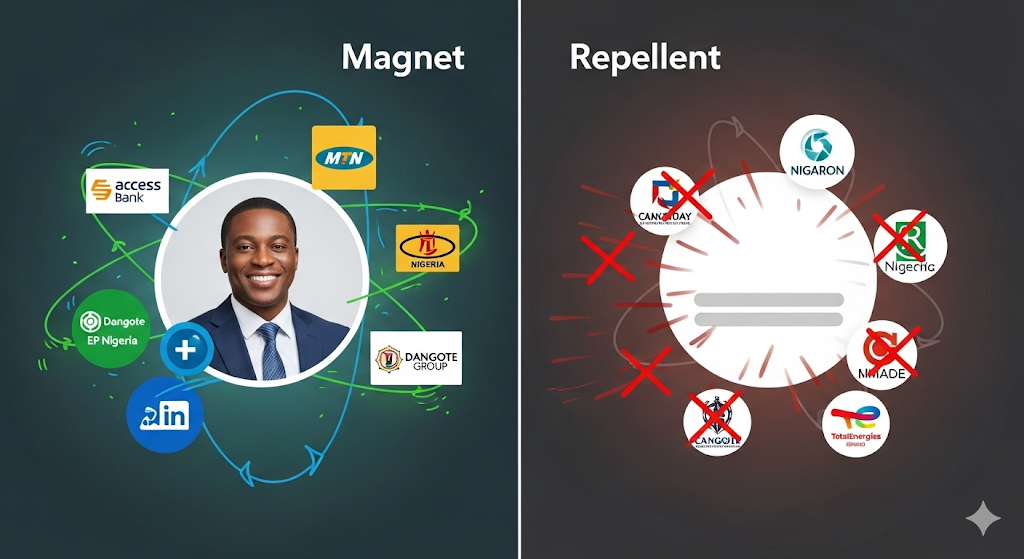
- The Impersonation Game: Scammers often impersonate reputable, well-known companies (e.g., MTN, Dangote, Shell, major banks). They might even use stolen company logos, official-looking email addresses (that are slightly off), and fake websites to appear legitimate.
- The Financial Hook: This is the ultimate goal. They will eventually ask you for money, even if it’s a small amount. This is the biggest red flag of all.
Red Flag Checklist: 10 Warning Signs of a Fake Interview
Here are the crucial warning signs to look out for at every stage of the application and interview process:
1. Upfront Payment Requests – The Ultimate Red Flag
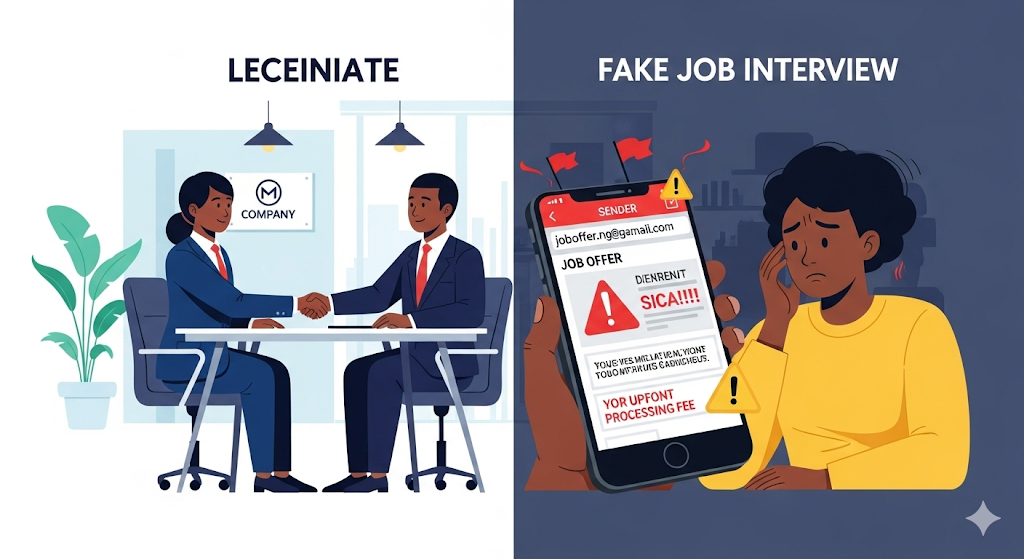
This is the number one, most critical sign of a scam. A legitimate employer will NEVER ask you for money to get a job.
- Forms: “Application processing fees,” “administrative charges,” “CV vetting fees.”
- Training: “Mandatory training fees” (especially if it’s for a generic course or from an unknown provider).
- Equipment/Uniform: “Deposit for company laptop,” “uniform fee,” “security clearance.”
- Logistics: “Visa processing fees,” “travel expenses to interview location” (which they ask you to pay upfront and promise reimbursement).
- Security: “Background check fees” (legitimate companies cover this cost).
If money is mentioned at any point, disengage immediately. This applies to money requested for “placement agencies” that promise you a job if you pay them.
2. Suspicious Communication Channels and Grammar
- Generic Email Addresses: Official companies use corporate email domains (e.g.,
john.doe@companyname.com). Be wary of emails from free accounts like Gmail, Yahoo, Hotmail, or even slightly misspelled corporate domains (e.g.,companyname.careers@gmail.comorcompanyname.ng@outlook.com). - Poor Grammar and Spelling: Major companies have professional communication standards. Numerous grammatical errors, typos, and awkward phrasing in the job description or emails are huge red flags.
- Text Message-Only Communication: While some initial contacts might be via SMS, a legitimate hiring process will quickly move to email and phone calls. Be cautious if they only communicate through text or messaging apps like WhatsApp, especially from unknown numbers.
3. Vague or Overly Broad Job Descriptions
- Lack of Specificity: The job description is very general, uses a lot of buzzwords without defining concrete responsibilities, or is a copy-paste of a generic template.
- Too Many Roles in One: The job seems to combine five different roles into one, promising unrealistic levels of responsibility or a salary that doesn’t match the required skills.
- No Specific Requirements: The “requirements” section is extremely basic or non-existent, suggesting they are not truly looking for specific skills.
4. Lack of a Formal Interview Process
- Immediate Offer Without Interview: They offer you the job after a brief chat, an email exchange, or without any formal interview whatsoever. Legitimate companies have a structured interview process.
- Unusual Interview Methods: Interviews conducted solely through text chat, WhatsApp, or obscure video conferencing apps, especially if they ask for personal information during the chat.
- No Opportunity for Questions: They rush through the “interview” and give you no chance to ask questions about the role or company.
5. Unverifiable Company Information
- No Online Presence: The company has no official website, LinkedIn page, or verifiable online presence. Or, their website looks very unprofessional, has poor design, or contains broken links.
- Recent Website Creation: Use tools like Whois.com to check the domain registration date. If the company website was created very recently (e.g., within the last few weeks or months), it’s suspicious, especially for a supposed “established” firm.
- Generic Address: The company address is vague, a residential address, or a virtual office that doesn’t align with their claimed size or operations. If you’re in the same city, Google Map the address; sometimes it’s an empty lot or a random building.
6. Pressure to Provide Personal or Financial Information Too Early
- Bank Details: They ask for your bank account number, ATM card PIN, or other sensitive financial information before you’ve even been offered a job or formally started. Legitimate employers will only ask for bank details AFTER you’ve been hired, to set up salary payments.
- Excessive Personal Details: Asking for details like your mother’s maiden name, full BVN (beyond what might be needed for a background check later), or copies of personal documents (passport, NIN) too early in the process.
7. The Offer is “Too Good to Be True”
- Exorbitant Salary: The salary offer is far above the market rate for the role and your experience, especially for an entry-level position.
- Luxurious Benefits: They promise lavish benefits like free international travel, housing allowances that are unrealistic, or company cars for junior roles.
- Guaranteed Promotion: They guarantee promotions or raises after an impossibly short period.
8. Inconsistent Information
- Contradictory Details: The job title, company name, or responsibilities change between the initial advert, the email, and the “interview.”
- Poor Knowledge of the Role: The person interviewing you seems to know very little about the actual job or the company’s operations.
9. Urgency and Secrecy
- Immediate Start Dates: They press for an immediate start date, often within days, without allowing for proper notice to your current employer or time to review the offer.
- “Secret” Project: They claim the role is for a “confidential project” and cannot provide many details, often as an excuse for vagueness.
10. Unprofessional or High-Pressure Tactics
- Unprofessional Interviewers: The interviewer is rude, disrespectful, or asks inappropriate personal questions.
- Pressure to Accept: They pressure you to accept the offer on the spot, without giving you time to review it or consult with others.
How to Protect Yourself: Your Action Plan
- Research, Research, Research:
- Company Name: Google the company name with keywords like “scam,” “reviews,” “fraud.” Check their LinkedIn profile, official website, and CAC registration (for Nigerian companies).
- People: If you have a contact person, search for them on LinkedIn. Do they work for the company? Is their profile consistent with the role they claim?
- Job Title/Description: Search for similar job titles and descriptions online. Does this particular advert seem out of place compared to others?
- Never Pay for a Job: This cannot be stressed enough. If they ask for money, it’s a scam. Full stop.
- Verify Contact Information: Don’t just reply to an email. If you have concerns, find the company’s official contact number on their genuine website and call them to verify the job opening and the person who contacted you.
- Question Generic Offers: If you get an offer that seems “too good to be true” and doesn’t align with your experience, it probably is.
- Protect Your Personal Information: Do not share sensitive information (bank account details, ATM PIN, BVN, copies of IDs) until you have a signed offer letter and are certain the company is legitimate.
- Trust Your Gut: If something feels off, it probably is. If your intuition is telling you to be careful, listen to it.
Conclusion: Stay Vigilant, Stay Safe
The quest for employment in Nigeria is a journey that demands resilience, determination, and increasingly, vigilance. Job scammers are sophisticated and constantly adapting, making it imperative for every job seeker to be educated and cautious. By understanding the common tactics, recognizing the red flags, and meticulously verifying every aspect of a potential opportunity, you can significantly reduce your risk of falling victim to fraud. Your dream job is out there, but you must protect yourself from those who would exploit your ambition. Stay smart, stay safe, and let your genuine talent lead you to a legitimate and fulfilling career.