How to Turn Your Internship into a Full-Time Job Offer in Nigeria
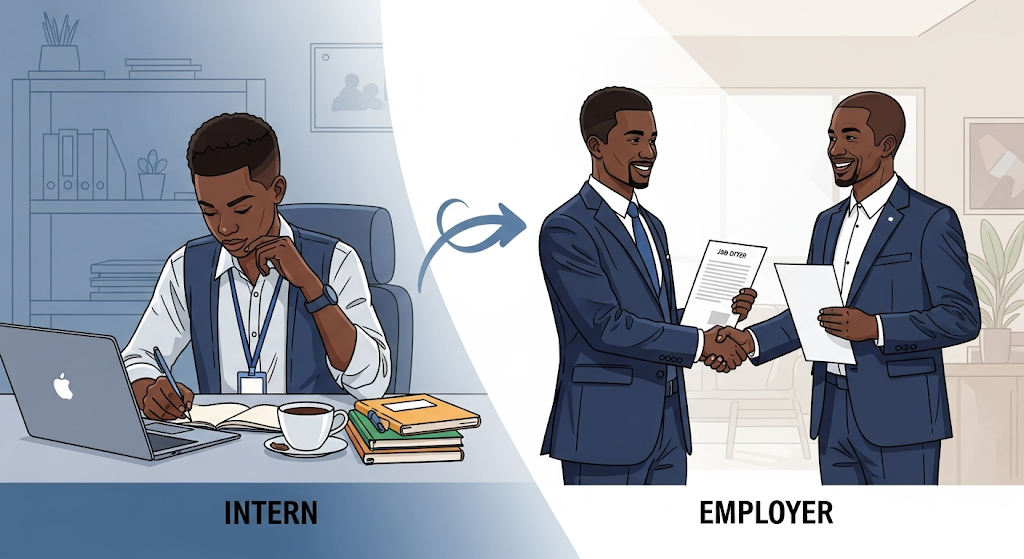
You’ve landed an internship in a reputable company in Lagos, Abuja, or another major Nigerian city. Congratulations! For many students, NYSC corps members, and recent graduates, securing an internship is a significant milestone. It’s a chance to get a foot in the door, gain some experience, and add a valuable line to your CV. But here is the critical mindset shift you must make from day one: an internship is not just a temporary learning experience. It is, without a doubt, the longest and most important job interview of your life.
In the fiercely competitive Nigerian job market, hundreds, if not thousands, of candidates apply for a single graduate role. An internship is your golden opportunity to bypass this crowded, uncertain process. For three to six months, you have direct access to the company. You have the chance to demonstrate your skills, your work ethic, your personality, and your value in a way that no CV or 30-minute interview ever could. You are no longer just a name on a piece of paper; you are a living, breathing part of the team. The question is, will you be a memorable one?
Many interns make the mistake of being passive. They show up, do what they are told, and leave. They treat it like an extended class or a temporary chore. This is a recipe for a polite “thank you and goodbye” at the end of your term. To turn your internship into a full-time job offer, you must be strategic, proactive, and intentional from your very first day. This guide is your comprehensive playbook for becoming so indispensable that the company can’t imagine letting you go.
Phase 1: The First Month – The Foundation of Excellence
Your first 30 days are about observation, absorption, and establishing a reputation for impeccable reliability. Your goal is to be seen as a dependable, enthusiastic, and fast learner.
Master the Basics with Unquestionable Excellence
In the beginning, you may be assigned tasks that seem mundane—making photocopies, scheduling meetings, transcribing notes, or running errands. Do not look down on these tasks. Your attitude towards them is your first test. A manager needs to know they can trust you with the small things before they ever consider trusting you with the big things. Execute every single task, no matter how small, with precision, a positive attitude, and ahead of schedule if possible. Be known as the intern who gets things done perfectly, every time.
Be a Punctuality Role Model
In cities like Lagos, where traffic is a constant battle, punctuality is a powerful statement. Arriving early every day shows discipline, respect for other people’s time, and a serious commitment to the role. It sets you apart from those who consistently blame traffic for their lateness. Plan your commute, have backup routes, and make being on time a non-negotiable part of your professional brand.
Learn Voraciously and Ask Smart Questions
Your first month is your chance to be a sponge. Absorb everything.
- Learn People’s Names and Roles: Make an effort to learn the names and job functions of your team members and even people in adjacent departments. Greet people politely in the mornings.
- Understand the Business: Go beyond your immediate tasks. Use your evenings to study the company’s website. What are their core products or services? Who are their main competitors in the Nigerian market? What was their last major success?
- Ask for Clarification: It’s better to ask a question than to make a mistake. When given a task, if you are unsure of anything, ask for clarification. A good way to frame this is: “Just to be sure I understand correctly, the goal of this task is X, and you would like me to complete it by Y. Is that right?”
Observe the Unspoken Rules
Every Nigerian office has its own unique culture. Pay close attention to the unwritten rules. How do people communicate—formally via email or informally on Slack? What is the real dress code? How are senior colleagues addressed? Understanding and adapting to the office culture shows that you are socially intelligent and a good fit for the team.
Phase 2: The Middle Months – Gaining Momentum and Visibility
You’ve built a foundation of reliability. Now it’s time to move from being a passive task-taker to a proactive problem-solver. This is where you start to truly differentiate yourself.
Ask for More Responsibility
Once you have consistently proven you can handle your initial duties, it’s time to ask for more. Wait for a quiet moment or a one-on-one check-in with your manager and say something like:
“Thank you for the opportunity to work on [Task X]. I’ve really enjoyed it and I feel I have a good handle on it now. I’m very eager to learn more and contribute in a deeper way. If there are any other projects or more complex tasks that you might need assistance with, I would be thrilled to help.”
This shows initiative and a desire for growth, which are key traits of a future full-time employee.
Find a Problem and Propose a Solution
This is a power move that very few interns ever make. As you work, keep an eye out for small, inefficient processes or recurring problems. Don’t just complain about them. Instead, think of a simple, practical solution. Draft a brief, one-page memo or email to your manager.
Example:
Subject: Idea for Improving Our Team’s Weekly Reporting
Hi [Manager’s Name],
I’ve noticed that compiling the data for our weekly report takes about three hours every Friday. I believe we could automate a large part of this process by creating a shared template on Google Sheets with some simple formulas. This could potentially cut the time it takes by half and reduce the chance of manual errors. Would you be open to me creating a small mock-up to demonstrate how it could work?
This single act can elevate you from “the intern” to “a strategic thinker” in your manager’s mind.
Network Internally Beyond Your Team
Your immediate team is not the only group of people who will influence your future at the company. Make a conscious effort to build relationships across the organization. Ask a colleague from another department if you can treat them to a quick coffee or lunch to learn about their role. This shows you are interested in the company as a whole and helps you build a wider network of advocates who can speak for you when hiring decisions are being made.
Document Your Achievements
Start a personal document on your computer called your “Brag File.” Every time you complete a task, contribute to a project, or receive positive feedback, write it down. Crucially, try to quantify your achievements.
- “Helped organize the company retreat” becomes “Assisted in the logistical planning for a 50-person company retreat, liaising with 5 vendors and ensuring the event was delivered 10% under budget.”
- “Handled social media” becomes “Managed the company’s Twitter account for a month, increasing engagement by 15% by introducing interactive polls.”
This document will be your ammunition when it’s time to ask for the job.
Phase 3: The Final Month – Sealing the Deal
The end of your internship is in sight. It’s time to be direct, professional, and make it clear that you want to stay.
Schedule “The Conversation”
About three to four weeks before your internship is scheduled to end, you need to initiate a conversation about your future. Send a professional email or meeting request to your manager.
Subject: Checking In & Discussing My Future at [Company Name]
Hi [Manager’s Name],
As my internship is approaching its end date of [End Date], I was hoping we could schedule a brief 20-minute chat next week to discuss my performance and my potential future with the company. Please let me know what time works best for you.
Prepare Your Value Proposition Pitch
This is where your Brag File becomes invaluable. Before the meeting, review your documented achievements and prepare a concise, 2-minute summary of the value you have brought to the team and the company during your time there. Be ready to talk about specific projects and results.
How to Ask for the Job
In your meeting, start by expressing your gratitude. Then, deliver your value pitch. Finally, make the ask directly, confidently, and politely.
The Script:
“Thank you again for this incredible opportunity. I’ve learned so much over the past few months, and I’ve truly enjoyed being a part of this team. I’m particularly proud of my contribution to [mention a key project], which resulted in [mention a key result].
I am very passionate about the work you are doing here at [Company Name], and I strongly believe my skills in [mention 1-2 key skills] can continue to add significant value. With my internship ending soon, I wanted to express my strong interest in becoming a full-time member of the team. I was hoping you might know if there are any upcoming junior roles in this department, or if there might be a possibility of creating a permanent position for me.”
Handle the Outcome with Grace
- If it’s a “Yes” or “Maybe”: Excellent! Discuss the next steps, the timeline, and who you need to speak with in HR.
- If it’s a “No”: Do not show disappointment. Remain professional and positive. The reason might be a hiring freeze or lack of budget, which is not a reflection on you. Use this as an opportunity to secure a strong recommendation. Say, “I completely understand, and I am grateful for the experience. Would you be willing to serve as a reference for me in my future job search? A strong recommendation from you would be incredibly valuable.”
Conclusion: From Temporary Intern to Indispensable Asset
An internship in Nigeria is a golden ticket, but only if you choose to cash it in. It’s an active, not a passive, experience. The journey from intern to full-time employee is a marathon of consistent excellence, proactive initiative, and strategic communication. By treating every day as part of a long-term interview and constantly looking for ways to add value, you transform yourself from temporary help into an indispensable asset.
Go beyond what is asked, solve problems people didn’t know they had, and build genuine relationships. Do this, and by the end of your internship, the conversation won’t be about whether they should hire you, but about how they can’t afford to let you go.