The Art of the Follow-Up: How to Email a Nigerian Recruiter After Applying
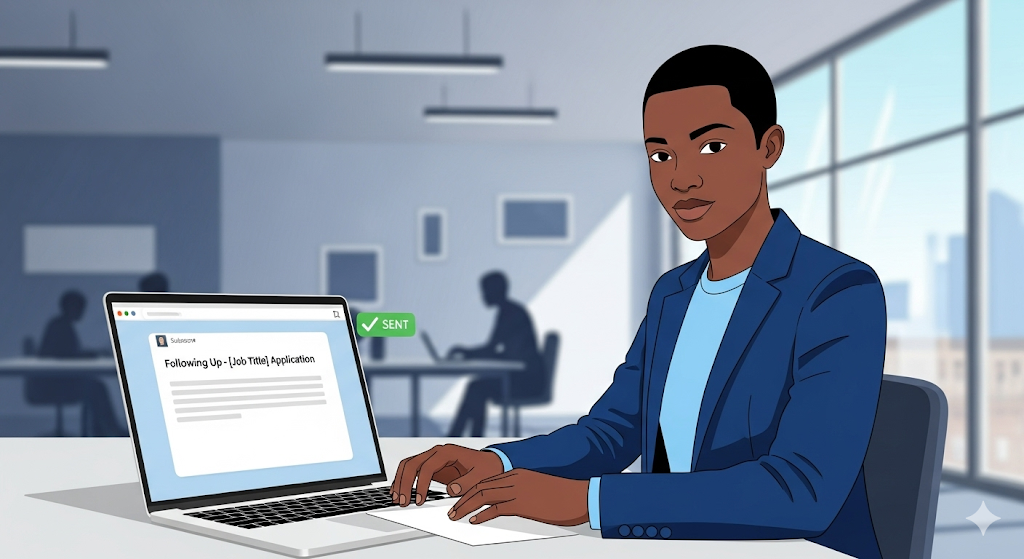
You’ve done the hard work. You’ve tailored your CV, crafted a compelling cover letter, and sent your application into the digital abyss for that perfect job in Lagos or Abuja. And now, the wait begins. The silence can be deafening, filled with anxiety and endless questions. Did they receive my application? Have they even looked at it? Is the position already filled? In the highly competitive Nigerian job market, it’s easy to feel powerless after you click “submit.” But what if there was a way to regain a measure of control, to gently nudge your application back into the spotlight, and to demonstrate your professionalism and initiative all at once?
This is the power of the follow-up email. Many Nigerian job seekers are hesitant to follow up, fearing they might come across as desperate, pushy, or annoying. This fear is understandable, but it’s often misplaced. When done correctly, a follow-up email is not an act of desperation; it is a strategic act of professional communication. It shows that you are organized, genuinely interested in the role, and possess the confidence and communication skills that employers value. A poorly written follow-up can certainly harm your chances, but a thoughtful, polite, and strategic one can be the very thing that separates you from a dozen other equally qualified candidates.
This is not about pestering a busy recruiter. This is the art of the professional nudge. In this guide, we will provide a complete masterclass on how to write the perfect follow-up email, complete with timelines, templates, and Nigeria-specific examples. We’ll show you how to be persistent without being a pest, and how to ensure your name stays at the top of the recruiter’s mind for all the right reasons.
Before You Write: Timing is Everything
The single most important rule of following up is patience. Sending an email too soon is the fastest way to annoy a recruiter and signal impatience. The Nigerian hiring process can be notoriously slow, involving multiple layers of approval. Give the process time to breathe.
The Golden Rule of Timing
The best time to send your first follow-up email is approximately 7 to 10 business days (about two weeks) AFTER the application deadline has passed. If no deadline was stated in the job advert, wait at least two full weeks from the day you submitted your application.
Why this timeframe?
- It’s Respectful: It shows you understand that recruiters are managing hundreds of applications for multiple roles and need time to screen them.
- It’s Strategic: By this time, they have likely completed the initial screening. Your polite email can serve as a perfect reminder of your candidacy just as they are deciding on a shortlist for interviews.
- It Avoids Prematurity: Sending an email after just two or three days makes you look anxious and suggests you don’t understand professional timelines.
Finding the Right Contact: The Detective Work
Sending your follow-up to a generic `info@company.com` address is better than nothing, but sending it directly to the hiring manager or a recruiter is infinitely more effective. But how do you find their email?
- Check the Job Posting: Sometimes, the contact person’s details are right there in the original job advert. Always check this first.
- Use LinkedIn: This is your most powerful tool. Search for the company on LinkedIn, then look for employees with titles like “Recruiter,” “Talent Acquisition Manager,” “HR Manager,” or the head of the department you’re applying to (e.g., “Head of Marketing”). Once you find a name, you have a target.
- Company Website: Check the “Our Team” or “Contact Us” pages on the company’s website. You might get lucky.
- Make an Educated Guess: Most companies use a standard email format. If you know the recruiter’s name is Bisi Adekunle and the company is ExampleCorp, you can try common formats like `bisi.adekunle@examplecorp.com`, `badekunle@examplecorp.com`, or `b.adekunle@examplecorp.com`. Tools like Hunter.io or RocketReach can also help with this.
If you absolutely cannot find a specific contact, addressing it to the “Hiring Team” and sending it to the general HR email address is your fallback option.
Anatomy of the Perfect Follow-Up Email
Your follow-up email must be a masterclass in brevity, professionalism, and clarity. It has one goal: to politely remind the recruiter of your application and reiterate your strong interest. Here is a breakdown of each component.
1. The Subject Line: Clear and Concise
The subject line must be professional and immediately tell the recruiter who you are and what the email is about. They receive hundreds of emails a day; make yours easy to categorize.
Bad Subject Lines: “Following Up,” “Checking In,” “Job Application”
Good Subject Lines (Use this format): Follow-Up: Application for [Job Title]
Examples:
- Follow-Up: Application for Digital Marketing Manager
- Follow-Up: Regarding the Risk Analyst Position
- Follow-Up: Bisi Adekunle, Application for Project Manager Role
This format is professional, scannable, and immediately gives the recruiter all the context they need.
2. The Salutation: Formal and Respectful
Always err on the side of formality. Use the person’s last name if you know it.
- Good: “Dear Mr. Ojo,” or “Dear Mrs. Bello,”
- Acceptable (if you don’t know the name): “Dear Hiring Manager,” or “Dear [Company Name] Hiring Team,”
- Bad: “Hi,” “Hey,” “Hello there”
3. The Opening: State Your Purpose
Get straight to the point in the first sentence. Remind them of the position you applied for and the date you submitted your application.
Example:
I hope this email finds you well. I am writing to politely follow up on my application for the [Job Title] position, which I submitted on [Date of Application, e.g., September 5, 2025] via your company’s career portal.
4. The Body: Add Value, Don’t Just Ask
This is the most crucial part. Do not simply ask, “Have you made a decision yet?” This puts the recruiter on the defensive. Instead, use this space to briefly reiterate your value and enthusiasm. Your goal is to remind them why you are a great candidate.
How to do it:
- Briefly restate your core qualification or a key skill that aligns with the role.
- Express your continued strong interest in the company and the position.
- Keep it to two or three sentences. This is a nudge, not a new cover letter.
Example:
My experience in managing end-to-end logistics for FMCG companies in Lagos, which I detailed in my CV, aligns closely with the requirements of this role. I remain very enthusiastic about the opportunity to contribute to [Company Name]’s innovative approach to supply chain management and am confident my skills can bring significant value to your team.
5. The Closing: Confident and Courteous
End the email with a polite and forward-looking statement. Make it clear that you are looking forward to the next steps, without being demanding.
Example:
Thank you for your time and consideration. I look forward to the possibility of discussing my application with you further.
Then, use a professional closing.
- Good: “Sincerely,” “Yours faithfully,” “Best regards,”
- Bad: “Cheers,” “Thanks,” “Talk soon”
Finally, type your full name and include your phone number and a link to your LinkedIn profile.
Putting It All Together: The Ultimate Follow-Up Template
Subject: Follow-Up: Application for [Job Title]
Dear [Mr./Mrs./Ms. Last Name or Hiring Manager],
I hope this email finds you well. I am writing to politely follow up on my application for the [Job Title] position, which I submitted on [Date of Application] via [Platform, e.g., LinkedIn, your career portal].
I was very excited to learn about this opportunity, as my [mention 1-2 key skills or experiences, e.g., X years of experience in talent acquisition, my background in data analysis] are a strong match for the qualifications you are looking for.
I remain deeply interested in this role and am very enthusiastic about the possibility of contributing to the team at [Company Name].
Thank you for your time and consideration. I look forward to hearing from you at your convenience.
Sincerely,
[Your Full Name]
[Your Phone Number]
[Link to your LinkedIn Profile]
The Second Follow-Up (and When to Stop)
What if you still don’t hear back after another week or two? You can send one final, very brief email. This email should be even shorter and should be a reply to your original follow-up email (so they have the context).
Example of a second follow-up:
Subject: Re: Follow-Up: Application for [Job Title]
Dear Mr. Ojo,
I hope you are having a productive week. I just wanted to quickly check in on the status of my application for the [Job Title] position. I remain very interested in the opportunity.
Thank you again for your time.
Sincerely,
[Your Name]
The Rule of Three: Do not send more than two follow-up emails. After the second email, the ball is in their court. Continuing to email them will move you from “proactive candidate” to “annoying pest.” If you don’t hear back, it’s time to respectfully move on and focus your energy on other opportunities.
Conclusion: Take Back Control with Professionalism
The job application process can often feel like a one-way street, but it doesn’t have to. The art of the follow-up is about transforming passive waiting into proactive, professional engagement. It is a subtle but powerful tool that, when used with the right timing, tone, and tact, can significantly improve your chances. It demonstrates confidence, attention to detail, and a genuine desire for the role—qualities that every Nigerian employer is desperately searching for. Stop waiting in silence. Master the art of the follow-up and give your application the final push it deserves.