What to Wear to a Job Interview in Nigeria: A Modern Dress Code Guide
You’ve done it. Your CV was compelling, your cover letter was persuasive, and you’ve landed the interview for a promising role in Lagos, Abuja, or another of Nigeria’s bustling commercial centers. As you prepare to answer the toughest questions, another equally important question looms: What on earth do you wear? In a country with a unique blend of conservative traditions, a burgeoning modern corporate culture, and a climate that can be unforgiving, choosing the right interview outfit is a strategic decision that can feel surprisingly complex.
First impressions are powerful, and in the Nigerian professional context, they are often sealed within the first 30 seconds of your arrival. Before you’ve even had a chance to deliver your perfectly rehearsed “Tell me about yourself” pitch, your attire has already spoken volumes about your professionalism, your judgment, and your respect for the opportunity. Dressing appropriately doesn’t just make you look good; it makes you feel confident, and that confidence can radiate throughout your entire interview performance.
Many candidates make the mistake of either underdressing, which signals a lack of seriousness, or overdressing in a way that feels dated and uncomfortable. This is not about having the most expensive clothes; it’s about demonstrating that you understand the unspoken rules of the professional world. This guide is your definitive, modern resource for navigating the nuances of interview attire in Nigeria, ensuring you present yourself as the polished, capable, and serious candidate you are.
The Golden Rule: Dress for the Job You Want (and the Company You’re Meeting)
The universal rule of thumb for interview attire is to dress one level above the company’s everyday dress code. If the company has a business casual policy, you should wear a full business professional outfit. If they are casual (like a tech startup), you should opt for business casual. This simple strategy ensures you always look respectful and serious without appearing completely out of place.
This, of course, requires research. Before your interview, do some detective work:
- Check their LinkedIn and Social Media: Look at pictures of their employees at work events. Are they in full suits, or smart trousers and shirts? This is your biggest clue.
- Visit their Website: The “About Us” or “Careers” page often has photos or videos that reveal the office culture and dress code.
- Consider the Industry: The dress code for a top-tier bank on Marina will be vastly different from a creative agency in Yaba. A law firm will be more conservative than an NGO.
When in doubt, always err on the side of being more formal. It is always better to be the most formally dressed person in the room than the most casually dressed. It shows you are taking the opportunity seriously.
The Modern Corporate Look for Men in Nigeria
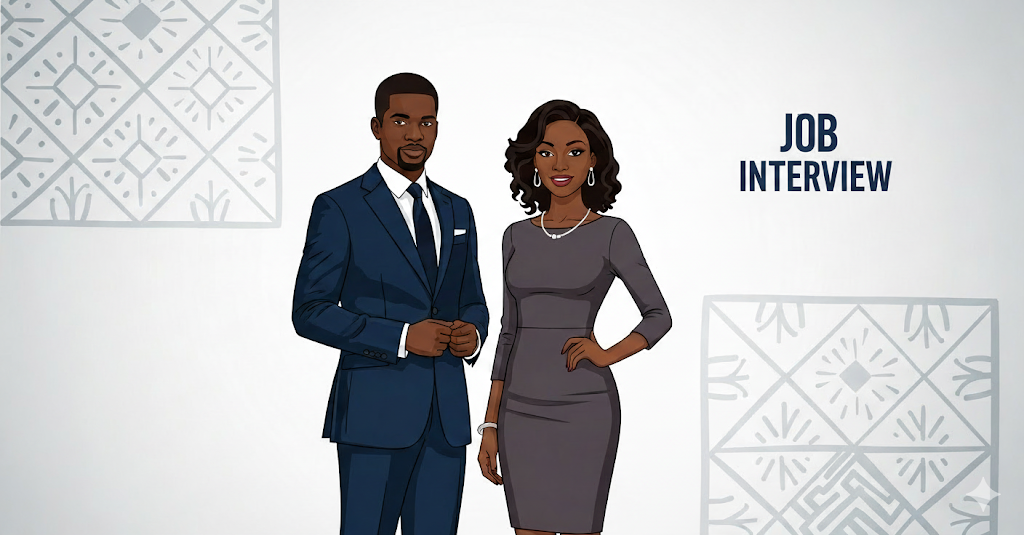
For men, the goal is to look sharp, clean, and professional. The traditional suit is still the gold standard for most corporate interviews in Nigeria.
The Suit or Blazer Combination
The Full Suit: For banking, law, consulting, finance, and senior management roles, a full, matching two-piece suit is non-negotiable.
- Colours: Stick to conservative, classic colours. Navy blue and charcoal grey are your best and most versatile options. Black can sometimes come across as too severe or funereal, so it’s best reserved for very formal evening events.
- Fabric: This is crucial for the Nigerian climate. Opt for lightweight wool, a wool blend, or even high-quality cotton. Avoid heavy fabrics that will have you sweating before you even greet the receptionist.
- Fit: This is the most important factor. An ill-fitting expensive suit looks worse than a perfectly tailored affordable one. Ensure the jacket fits well on the shoulders (no pulling or sagging) and the trousers have a clean break over your shoes (not bunched up or too short). Invest in a good tailor if needed.
The Blazer/Trouser Combination: For business casual environments, tech companies, or mid-level roles, a smart blazer paired with different-coloured trousers is an excellent modern alternative.
- Combinations: A navy blue blazer is the most versatile piece a man can own. Pair it with well-fitted trousers in grey, khaki, or beige. Avoid pairing a blazer with jeans for an interview, no matter how casual the company seems.
The Shirt and Tie
The Shirt: A long-sleeved, collared shirt is mandatory.
- Colours: You can never go wrong with a crisp white or light blue shirt. These colours look clean, professional, and work with any suit colour.
- Fit and Condition: Ensure the shirt is well-ironed, with no stains. The collar should not be frayed.
The Tie: A tie pulls the entire look together and signals professionalism.
- Style: Opt for a silk or silk-blend tie in a conservative pattern (stripes, subtle geometrics) or a solid colour like burgundy, navy, or dark green.
- Avoid: Novelty ties, overly bright colours, or flashy brand logos. Ensure the tie is tied correctly (a simple Windsor knot is perfect) and the tip just touches the top of your belt buckle.
Footwear and Accessories
- Shoes: Leather dress shoes are a must. Oxfords or Derbys in black or dark brown are the best choices. Ensure they are clean and well-polished. Do not wear loafers, sandals, or sneakers.
- Socks: Wear dark-coloured dress socks that match the colour of your trousers (not your shoes). No white athletic socks.
- Belt: Your leather belt should match the colour of your shoes (black shoes, black belt; brown shoes, brown belt).
- Accessories: Keep them minimal. A professional watch is excellent. Avoid flashy rings, bracelets, or chains. Carry your documents in a clean, professional portfolio or a simple leather bag.
Grooming
Your grooming is part of your outfit. Ensure your hair and beard (if you have one) are neatly trimmed and combed. Pay attention to personal hygiene. Avoid using strong cologne or perfume; some people are sensitive to scents, and it can be overpowering in a small interview room.
The Modern Corporate Look for Women in Nigeria
For women, the objective is to look polished, competent, and conservative. You have a few more options than men, but the core principles of professionalism and fit remain the same.
The Suit or Professional Dress
The Pant or Skirt Suit: A well-tailored suit is a power outfit that exudes confidence and is perfect for corporate roles.
- Colours: Similar to men, navy blue, charcoal grey, and black are excellent, safe choices. Deep burgundy or a subtle pinstripe can also work well.
- Fit: Tailoring is key. The jacket should close comfortably without pulling, and the sleeves should end at your wrist. Trousers should be well-fitted (not too tight), and skirts should be knee-length or slightly longer. A pencil or A-line skirt is a classic choice.
The Conservative Dress: A structured, knee-length dress is another fantastic option.
- Style: A “sheath” dress is a classic interview choice. It should have a conservative neckline (no cleavage) and sleeves (cap sleeves or longer are best). Pair it with a matching or complementary blazer to complete the look.
- Fabric and Colour: Choose a dress in a solid, neutral colour and a high-quality fabric that doesn’t wrinkle easily.
A Note on Traditional Attire (Ankara): While we are proud of our cultural heritage, it’s generally safer to stick to Western business attire for a corporate interview unless you are certain the company culture is very welcoming of it (e.g., some public sector or culturally focused organizations). If you do choose to incorporate Ankara, do it subtly. A beautifully made blazer with Ankara lapels paired with plain trousers, or a professional dress with subtle Ankara accents, can be a great way to show personality without being distracting.
The Blouse or Camisole
Under your suit jacket, wear a simple, conservative blouse or camisole.
- Colours: White, ivory, light blue, or other muted solid colours are best.
- Style: Ensure it is not low-cut or sheer. A simple silk, chiffon, or high-quality cotton blouse is ideal.
Footwear and Accessories
- Shoes: Closed-toe shoes are mandatory. A classic court shoe (pump) with a low to medium heel in a neutral colour like black, navy, or nude is the perfect choice. Ensure the shoes are comfortable enough to walk in and are not scuffed. Avoid stilettos, open-toed shoes, sandals, or flats.
- Bag: Carry a structured, professional handbag or tote large enough to hold your documents. A simple leather bag in a neutral colour is best.
- Jewellery: Keep it minimal and elegant. A simple pair of stud earrings, a delicate necklace, and a watch are perfect. Avoid noisy, dangling bracelets, large hoops, or flashy statement pieces that can be distracting.
Makeup and Grooming
Your makeup should be natural and professional. Aim for a polished look, not a “night out” look. Your hair should be neat and styled away from your face. Nails should be clean and well-manicured, with a neutral polish or a classic French manicure. As with men, avoid strong perfumes.
Conclusion: Dress for the Success You Deserve
Dressing for an interview in Nigeria is about showing respect for the opportunity, the company, and yourself. Your outfit is the packaging for your skills and experience. By following these guidelines, you are not trying to be someone you’re not; you are simply presenting the most professional version of yourself. When you look the part, you feel more confident, and that confidence will be your greatest asset when answering tough questions. Do your research, plan your outfit in advance, and walk into that interview room knowing that your first impression is a winning one.