How to Transition from Your 9-5 to a Full-Time Freelancer in Nigeria
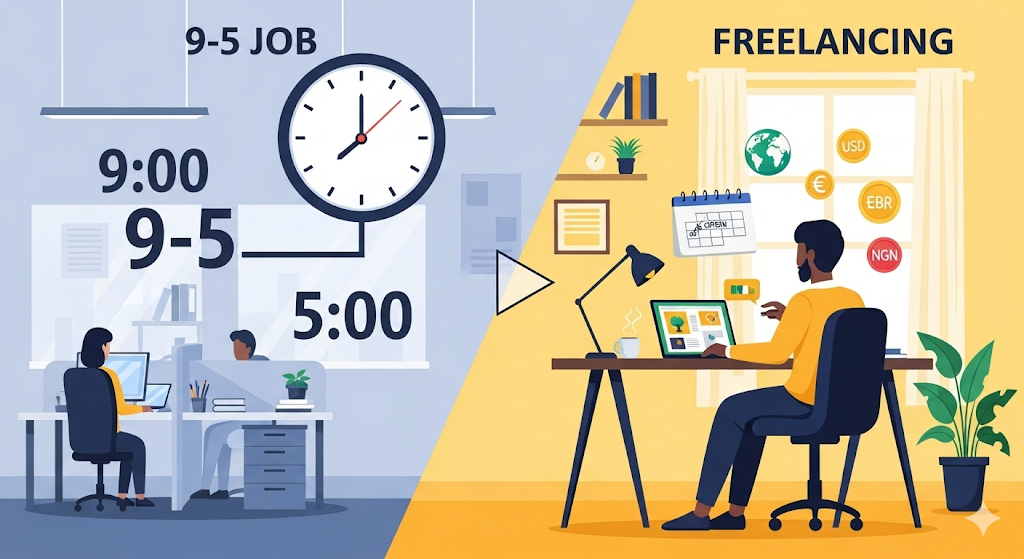
The allure is undeniable. The thought of escaping the gruelling Lagos traffic, the rigid 9-5 schedule, and the limitations of a fixed monthly salary is a powerful dream for many Nigerian professionals. The promise of freelancing—of being your own boss, setting your own hours, and having your income directly tied to your effort and skill—is incredibly compelling. You see success stories on Twitter and LinkedIn of Nigerian freelancers earning in dollars, working with international clients, and living life on their own terms. It seems like the ultimate career goal.
But between the dream and the reality lies a challenging, often daunting, transition. Quitting your stable 9-5 job, with its predictable salary and benefits, to plunge into the world of full-time freelancing is not a decision to be taken lightly. It requires more than just skill; it demands meticulous planning, financial discipline, and a resilient, entrepreneurial mindset. A failed transition can be financially and emotionally devastating, forcing a difficult retreat back to the very system you sought to escape.
This is not a guide for dreamers; this is a strategic roadmap for planners. If you are serious about making the leap from a traditional employee to a successful full-time freelancer in Nigeria, you need a battle plan. This comprehensive guide will walk you through the essential phases of a successful transition, from laying the groundwork while you’re still employed to navigating your first few months as your own boss. This is how you turn the dream into a sustainable reality.
Phase 1: The Foundation (To Be Built While You Are Still Employed)
The most successful transitions are the ones that are planned and executed long before you ever hand in your resignation letter. Your current 9-5 is not a prison; it is your launchpad. It provides the financial stability you need to build your freelance career on the side without taking on massive risk. This phase can take anywhere from six months to two years, but the work you do here is non-negotiable.
1. Define Your High-Value Niche
You cannot be a generalist and expect to command high rates. The market is too competitive. You must specialize. Instead of being a “Writer,” be a “Financial Technology (Fintech) Content Writer for B2B Startups.” Instead of being a “Graphic Designer,” be a “Brand Identity Designer for E-commerce Businesses.”
Action Steps:
- Analyze Your Skills: What are you genuinely good at? What part of your current 9-5 job do you excel at?
- Research the Market: Where is the money? Look at the fastest-growing industries in Nigeria (Fintech, Agri-tech, Health Tech, E-commerce). These sectors have problems and are willing to pay for expert solutions.
- Find the Overlap: Your ideal niche is at the intersection of your skills, your interests, and market demand.
2. Build Your Portfolio (Your Proof of Competence)
No serious client will hire you without seeing your work. A portfolio is a collection of your best projects that demonstrates your expertise in your chosen niche. You must build this while you are still employed.
Action Steps:
- Use Your 9-5 Work (If Possible): If you’ve worked on projects that are not under a strict non-disclosure agreement (NDA), you can create case studies around them. Anonymize any sensitive client data.
- Do Pro Bono or Low-Cost Work: Offer your services for free or at a steep discount to a few local NGOs or small businesses in exchange for a glowing testimonial and the right to use the work in your portfolio. This is a fantastic way to get started.
- Create Personal Projects: If you are a UI/UX designer, redesign a popular Nigerian app and document your process. If you are a writer, start a professional blog focused on your niche. This shows initiative and passion.
3. Create Your Financial Safety Net (The “Sinking Fund”)
This is arguably the most critical step. Quitting your job without a substantial financial cushion is reckless. In the freelance world, income can be unpredictable, especially in the beginning. You need to save what is often called a “sinking fund” or an emergency fund.
The Golden Rule: Save at least 6 to 9 months’ worth of your essential living expenses in Naira. Calculate what you absolutely need to survive each month (rent, food, transport, data, etc.) and multiply that by six. This fund is not for investment; it is your lifeline. It’s what will allow you to make decisions based on strategy, not desperation.
Action Steps:
- Create a Budget: Track your income and expenses religiously to know exactly how much you need per month.
- Open a Separate Savings Account: Keep your sinking fund in a high-yield savings account that you do not touch for any other reason.
- Automate Your Savings: Set up a direct debit to move a fixed amount of your salary into this savings account every payday.
4. Find Your First Few Clients (The Test Run)
You must prove your business model before you go full-time. You need to confirm that people are willing to pay you for your skills. The goal here is to secure 1-3 paying clients on a retainer or recurring project basis while you still have your 9-5.
Action Steps:
- Leverage Your Network: Let your friends, family, and professional contacts know that you are taking on freelance work in your specific niche. Your first client is often someone you already know.
- Use Freelance Platforms: While platforms like Upwork and Fiverr can be competitive, they are excellent for landing your first few projects and building a reputation.
- Optimize Your LinkedIn Profile: Your headline should clearly state what you do (e.g., “Freelance B2B Tech Writer | Helping SaaS Companies in Africa with Content Strategy”). Start sharing valuable content related to your niche.
Phase 2: The Overlap – Juggling Both Worlds
This is the “hustle” phase. You are working your 9-5 while building your freelance business in your spare time. It requires discipline and excellent time management.
1. Master Your Schedule
You need to be ruthless with your time. Wake up earlier, use your lunch breaks wisely, and dedicate your evenings and weekends to your freelance work. Communicate your schedule clearly to your freelance clients (e.g., “I respond to emails in the evenings and my turnaround time for this project is X days”).
2. Avoid Burnout
Working two jobs is exhausting. You must schedule downtime to rest and recharge. It is a marathon, not a sprint. Be realistic about the number of freelance projects you can take on without compromising your health or the quality of your work at your 9-5.
3. Navigate Conflicts of Interest
This is crucial. Never work on freelance projects using your employer’s time or equipment. Be very careful about working with clients who are direct competitors of your current employer. Be discreet and professional. Your goal is to leave your 9-5 on good terms.
Phase 3: The Leap – Making the Transition
The day you resign is a major milestone. But how do you know when you’re truly ready?
The Green Light: When to Quit Your 9-5
You are ready to make the leap when you have met these two conditions:
- The Financial Milestone: You have saved at least 6 months of living expenses in your sinking fund.
- The Income Milestone: Your consistent monthly income from your freelance clients is equal to at least 70-80% of your current 9-5 salary for three consecutive months.
Once you hit both of these milestones, the risk is significantly reduced. You have a financial cushion and proven market demand for your services.
The Immediate Next Steps
- Resign Professionally: Give proper notice (as stated in your employment contract) and write a gracious resignation letter. Do a thorough handover of your duties. Do not burn bridges. The Nigerian professional community is small.
- Formalize Your Business: Register your business name with the Corporate Affairs Commission (CAC). This adds a layer of professionalism and is necessary for opening a corporate bank account.
- Set Up Your Finances: Open a separate bank account for your business. This is crucial for tracking income and expenses and for tax purposes.
- Create a Routine: The freedom of freelancing can be a trap. Create a structured workday for yourself. Set clear working hours, take scheduled breaks, and have a dedicated workspace.
Phase 4: The First 90 Days – Thriving as a Full-Time Freelancer
You’ve made the leap. Now the real work begins. Your focus shifts from building a side hustle to running a sustainable business.
1. Build Your Client Pipeline
Your number one priority is marketing and sales. You should be spending at least 25% of your time on activities that bring in new clients. This includes networking on LinkedIn, sending personalized cold emails, and asking for referrals from existing clients.
2. Set Your Rates with Confidence
You are now responsible for your own pension, health insurance, and taxes. Your rates must reflect this. Calculate your desired annual income, add your estimated business expenses and taxes, and then work out your hourly or project rate. Do not undercharge out of fear.
3. Manage Your Finances Like a Business
You are now the CFO. Track every invoice, follow up on late payments, and, most importantly, set aside a percentage of every payment (a good rule of thumb is 25-30%) for taxes and savings (like your pension). Consult with a financial advisor or accountant to understand your tax obligations.
Conclusion: From Employee to CEO of You, Inc.
The journey from a structured 9-5 to the liberating world of full-time freelancing is one of the most challenging and rewarding professional transformations you can undertake. It requires you to evolve from an employee who executes tasks to an entrepreneur who builds a system, finds clients, and delivers value on their own terms. It is not an escape from work; it is an embrace of a different, more accountable way of working.
The path is not easy, and it is not for everyone. But for those with the discipline to plan, the resilience to hustle, and the courage to leap, the rewards are immeasurable. You don’t just gain control over your schedule; you gain control over your career and your life. The freedom is real, and with this roadmap, it is entirely within your reach.