Is Your LinkedIn Profile a Magnet or a Repellent for Nigerian Hiring Managers?
In the bustling, hyper-competitive professional landscape of Nigeria, your Curriculum Vitae (CV) is no longer your only calling card. Long before you get a chance to impress in an interview, and sometimes even before your CV is opened, a crucial first impression has already been made. Where? On LinkedIn. For hiring managers in Lagos, talent acquisition specialists in Abuja, and decision-makers across the country, your LinkedIn profile is the default background check, the preliminary interview, and the ultimate test of your professional brand. It has evolved from a simple online resume to a dynamic, living portfolio of your career.
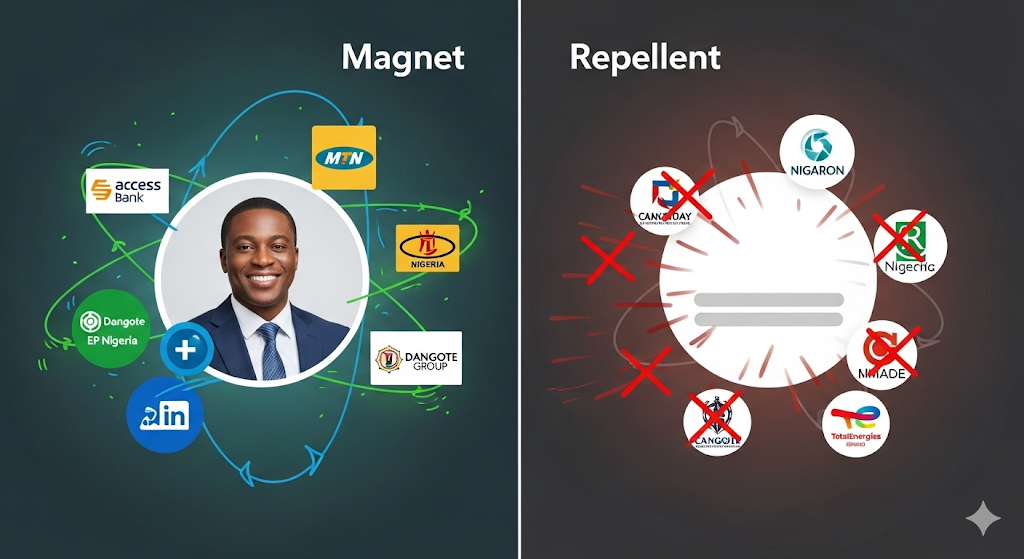
This reality presents a critical question every Nigerian professional must ask themselves: Is my LinkedIn profile a magnet, actively attracting opportunities and drawing in recruiters? Or is it a repellent, silently sabotaging my chances with easily avoidable mistakes and a lack of care? The difference between the two is stark and can mean the difference between a flood of interview requests and a frustrating, silent job search.
A repellent profile is incomplete, unprofessional, and passive. It screams a lack of effort and digital savviness. A magnetic profile, on the other hand, is strategic, polished, and active. It tells a compelling story, showcases tangible achievements, and positions you as a knowledgeable expert in your field. This is not about vanity; it’s about strategic career management. In this comprehensive guide, we will dissect every crucial element of your LinkedIn profile, showing you how to transform it from a career repellent into a powerful opportunity magnet tailored for the Nigerian job market.
The First Impression: What Recruiters See in 5 Seconds
When a hiring manager lands on your profile, they make a snap judgment in seconds. Two elements carry almost all the weight of this first impression: your profile picture and your headline. Getting these wrong is like fumbling a handshake.
Your Profile Picture
The Repellent: A surprising number of professionals in Nigeria use profile pictures that are instantly disqualifying. These include:
- A low-resolution selfie taken in a poorly lit room or a car.
- A cropped photo from a wedding or social event, often with someone else’s shoulder still in the frame.
- A picture of you looking away from the camera, wearing sunglasses, or with a distracting, messy background.
- No picture at all. An empty silhouette is the digital equivalent of being a ghost—it lacks credibility and is often skipped by recruiters.
The Magnet: A magnetic profile picture is simple, professional, and warm. It doesn’t require a professional photography studio, just a little effort.
- It’s a Headshot: Your face and shoulders should dominate the frame.
- You’re Smiling: A warm, genuine smile makes you look approachable and confident.
- Professional Attire: Dress as you would for an interview in your industry. For corporate roles, this means a suit or a smart blouse.
- Clean Background: Stand against a plain, neutral-coloured wall. A wall in your house or office is perfect.
Your picture is your first digital handshake. A professional and friendly photo builds instant trust and encourages a recruiter to learn more about you.
Your Headline
This is the most valuable piece of real estate on your entire profile. It follows your name everywhere on LinkedIn. By default, LinkedIn populates it with your current job title, which is a massive missed opportunity.
The Repellent: A headline that is vague, uninformative, or worse, desperate.
- “Unemployed” or “Seeking new opportunities.” (This tells them what you lack, not what you offer).
- Just a generic job title like “Manager” or “Associate.”
- “Student at University of Lagos.”
The Magnet: A magnetic headline is a concise, keyword-rich summary of your value proposition. It should be optimized for the searches recruiters are performing.
- Formula: [Your Role] | [Key Skills/Specializations] | [Your Unique Value or Industry]
- Example for a Data Analyst: Data Analyst | Power BI, SQL & Python | Helping Nigerian Fintechs Make Data-Driven Decisions
- Example for a Human Resources professional: Human Resources Manager | Talent Acquisition & Employee Relations | CIPM Certified | Building High-Performance Teams in the Nigerian Tech Space
- Example for a recent graduate: First-Class Economics Graduate | Financial Analysis & Market Research | Seeking an Entry-Level Finance Role in Lagos
This approach ensures that when a recruiter in Nigeria searches for “Talent Acquisition” or “Power BI,” your profile appears.
Your “About” Section: Telling Your Professional Story
If your headline is the hook, your “About” section is the narrative. This is your chance to expand on your headline and provide a compelling summary of your career story, skills, and ambitions.
The Repellent: An “About” section that is empty, written in the third person (“John is a hardworking professional…”), or is just a dense block of text filled with buzzwords. This is a huge red flag that signals laziness.
The Magnet: A magnetic “About” section is written in the first person (“I am…”) and is structured like a mini-story. It should be easy to read and packed with keywords.
A Winning Structure:
- The Opening: Start with a powerful one-sentence summary of who you are and what you’re passionate about. “I am a seasoned project manager with over 8 years of experience delivering complex infrastructure projects across Nigeria.”
- The Body (Your Proof): In the next 2-3 paragraphs, highlight your key areas of expertise and back them up with quantified achievements. Don’t just say you’re good at sales; prove it. “I specialize in B2B sales within the FMCG sector, and in my last role, I grew my territory’s revenue by 40% (from ₦50M to ₦70M) in one year.”
- The Closing (Your Ambition): End by stating what you’re passionate about and what kind of opportunities you are open to. “I am passionate about leveraging technology to solve logistical challenges and am currently seeking a senior operations role where I can contribute to building a more efficient supply chain in West Africa.”
Sprinkle in a “Specialties” or “Key Skills” section at the end with a bulleted list of keywords to further optimize for search.
Your Experience Section: From Duties to Achievements
This section should mirror the best practices of a modern, achievement-oriented CV. It should not be a simple list of your past employers.
The Repellent: Listing a job title and company with no description beneath it. Or, copying and pasting the generic duties from your old job description. This tells a recruiter nothing about the impact you made.
The Magnet: For each role, especially the most recent and relevant ones, you must describe what you accomplished. A magnetic experience section:
- Uses 3-5 Bullet Points: For each position, list your most significant accomplishments.
- Quantifies Everything: Just like on your CV, use numbers, percentages, and Naira values to showcase your impact. “Managed a marketing budget of ₦25 million” is far more powerful than “Was responsible for the marketing budget.”
- Starts with Action Verbs: Begin each bullet point with a strong verb like “Led,” “Developed,” “Increased,” “Negotiated,” or “Implemented.”
- Includes Rich Media: LinkedIn allows you to add links, photos, videos, and presentations to each experience entry. If you worked on a public project, wrote an article, or created a presentation, link to it. This provides tangible proof of your work.
Skills, Endorsements, and Recommendations
These sections provide social proof for the claims you make in the rest of your profile.
The Repellent: A list of 50 generic skills with only one or two endorsements each, often from people the recruiter has never heard of. It looks like you just clicked every suggestion LinkedIn offered.
The Magnet: A curated and validated list of your most important competencies.
- Curate Your Skills: Edit your skills list down to the 10-15 most relevant ones for your target career path.
- Pin Your Top Three: LinkedIn allows you to pin your three most important skills at the top. Make sure these align perfectly with the jobs you are targeting.
- Actively Seek Endorsements: Don’t be shy. Reach out to former managers and senior colleagues and politely ask them to endorse you for a few specific skills. This adds significant weight.
- Prioritize Recommendations: A written recommendation is 10 times more powerful than an endorsement. A short paragraph from a former boss praising your work on a specific project is invaluable. The best way to get them is to give them. Write a thoughtful recommendation for a respected colleague, and they will likely return the favour.
Your Activity: Show You’re Engaged
A dormant LinkedIn profile suggests a lack of passion or engagement with your industry. Recruiters want to hire people who are proactive and intellectually curious.
The Repellent: Your profile shows no activity for the last six months. No posts, no comments, no likes. You are a digital ghost.
The Magnet: Your activity feed shows that you are an active participant in your professional community.
- Share Relevant Content: Once or twice a week, share an interesting article about your industry (e.g., a new CBN policy for finance professionals, a new technology for engineers). Add a short sentence with your own opinion to show you’ve read it.
- Engage Thoughtfully: Leave insightful comments on posts made by industry leaders or companies you admire. A comment like “Great point on supply chain optimization. I saw a similar challenge in the Lagos market where…” is far better than just “Nice post.”
- Post Your Own Updates: You don’t have to be a thought leader. Post a simple text update about a certification you just completed, a project you’re proud of, or a key takeaway from a webinar you attended.
Conclusion: From Passive Profile to Active Magnet
Your LinkedIn profile is not a task to be completed once and then forgotten. It is a vital, ongoing part of your professional identity in the modern Nigerian workplace. It works for you 24/7, making introductions and building your reputation while you are busy with your day job. By shifting your mindset and investing a few hours to transform your profile from a passive repellent to an active magnet, you are not just improving a webpage; you are making a strategic investment in your future career success. Go through your profile section by section, apply the principles in this guide, and start attracting the opportunities you truly deserve.