Job Hunting Burnout is Real: How to Stay Motivated in the Nigerian Market
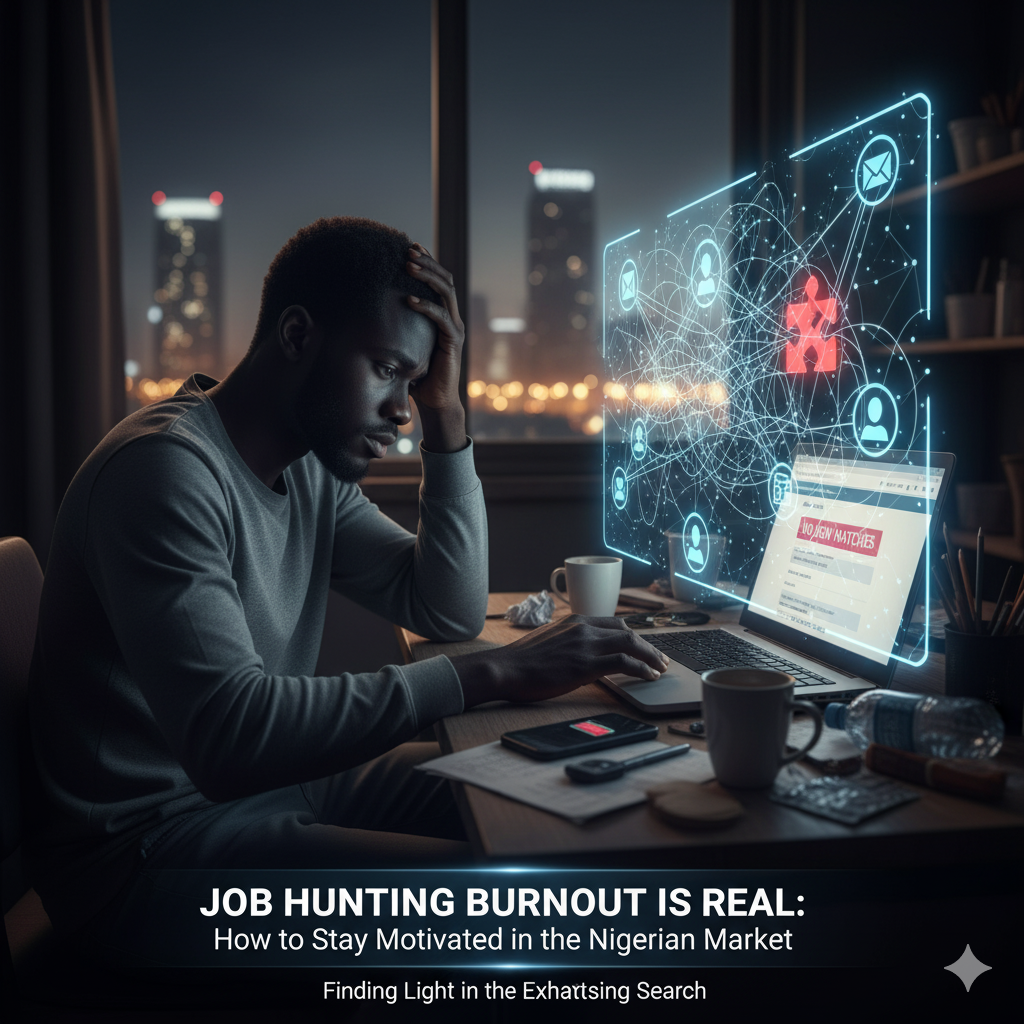
It’s 11 PM on a Wednesday. The glow from your phone screen is the only light in the room. You’ve just sent out your 15th application for the day, the 75th for the week. You’ve tweaked your CV so many times that you’re not even sure it makes sense anymore. Your email inbox is a graveyard of automated responses and, more painfully, complete silence. You close your eyes and feel a familiar wave of exhaustion wash over you—a fatigue that goes deeper than just being tired. It’s a mix of frustration, cynicism, and a creeping sense of hopelessness. This, right here, is job hunting burnout.
If this scenario feels familiar, you are not alone. Job hunting burnout is a very real and debilitating state of emotional, mental, and physical exhaustion caused by the prolonged stress of a job search. And in the unique, high-pressure context of the Nigerian job market, this burnout isn’t just a possibility; for many, it’s an inevitability. The combination of fierce competition, economic uncertainty, and immense societal pressure creates a perfect storm for mental and emotional strain.
But acknowledging the problem is the first step toward overcoming it. This isn’t a sign of weakness; it’s a valid response to an incredibly challenging process. This guide will help you understand the specific factors that make the Nigerian job hunt so draining, recognize the warning signs of burnout, and most importantly, equip you with practical, actionable strategies to protect your mental health, reclaim your motivation, and successfully navigate your way to your next opportunity.
Why the Nigerian Job Hunt is a Unique Marathon of Endurance
To effectively combat burnout, we must first respect the opponent. The job search in Nigeria isn’t just a standard application process; it’s an ultramarathon with its own set of unique hurdles that can drain even the most optimistic and resilient individuals.
- The Sheer Volume of Competition: With a large youth population and a limited number of formal job openings, it’s common for a single graduate trainee role to attract thousands, sometimes tens of thousands, of applicants. The constant awareness of these numbers can make the task feel impossible and your efforts seem insignificant.
- The “Man-Know-Man” Factor: The pervasive belief (and often, the unfortunate reality) that connections and nepotism can trump merit is deeply demoralizing. When you feel like you’re being judged on who you know rather than what you know, it’s easy to become cynical and question the point of even trying.
- Intense Societal and Family Pressure: In our culture, a job is more than just a source of income; it’s a marker of success, responsibility, and adulthood. The constant, well-meaning questions from family (“Any good news yet?”) and the unspoken pressure to start contributing to household bills can create a crushing weight of expectation.
- The Epidemic of “Ghosting”: You spend hours tailoring your CV, writing a brilliant cover letter, and sometimes even attending multiple interview stages, only to be met with complete silence. This lack of feedback or closure is not just unprofessional; it’s emotionally draining and can severely damage your self-confidence.
- The Hidden Costs of Unemployment: Job hunting is a full-time job that doesn’t pay. The costs of internet data for browsing and applying, transportation fares for interviews, and even printing documents add up, creating financial stress on top of the emotional strain.
Recognizing the Red Flags of Burnout
Burnout doesn’t happen overnight. It’s a gradual process. Being able to spot the warning signs early can help you take corrective action before you hit a wall. Look out for these changes in yourself:
Emotional Signs
- Cynicism and Detachment: You start feeling disconnected from the process. You roll your eyes at job descriptions and feel a sense of dread instead of hope when you think about applying.
- Loss of Confidence: You begin to internalize the rejections. Your sense of self-worth takes a nosedive, and you start to doubt your skills and qualifications.
- Increased Irritability: You find yourself snapping at friends and family and feeling constantly on edge.
Behavioral Signs
- Procrastination: You delay or avoid job-seeking activities that you used to perform diligently.
- Careless Mistakes: You find yourself making typos on your CV or sending the wrong cover letter to a company—things you would never have done before.
- Social Withdrawal: You start avoiding conversations or gatherings with friends, especially those who are employed, because you’re tired of answering the same questions.
Physical Signs
- Persistent Fatigue: You feel tired all the time, even after a full night’s sleep.
- Changes in Sleep or Appetite: You’re either sleeping too much, suffering from insomnia, or your eating habits have changed drastically.
- Frequent Headaches or Muscle Pain: Chronic stress often manifests physically.
Actionable Strategies to Fight Back and Stay Motivated
Recognizing the signs is one thing; knowing what to do about them is another. Here are practical strategies designed to help you regain control and build resilience.
1. Structure Your Hunt Like a 9-to-3 Job, Not a 24/7 Obsession
When you’re unemployed, the days can blend together, and it’s easy to let the job hunt consume every waking hour. This is a recipe for burnout. Instead, create a structure. Treat your job search like a professional project with defined hours.
- Set a Daily Schedule: For example, 9:00 AM to 12:00 PM for searching and applying for jobs. 1:00 PM to 3:00 PM for skill development or networking.
- “Clock Out”: When 3:00 PM hits, you are done for the day. Close the job tabs. Put the phone away. Give your mind a break. This boundary is crucial.
- Protect Your Weekends: Take at least one, if not both, days of the weekend completely off. Do something you enjoy. Recharge. The job portals will still be there on Monday.
2. Ditch the “Spray and Pray” for a Quality-Over-Quantity Approach
Sending out hundreds of generic applications is exhausting and ineffective. It makes you feel busy, but it rarely yields results, leading to more frustration. Shift your strategy.
- Target and Tailor: Instead of 20 random applications a day, aim for 3-5 highly targeted applications. Read the job description thoroughly. Customize your CV to highlight the exact skills and experiences they’re looking for. Write a specific, thoughtful cover letter.
- Track Your Applications: Use a simple spreadsheet to keep track of where you’ve applied, the date, and the specific version of the CV you used. This creates a sense of order and progress.
3. Redefine What “Productive” Means
Your worth is not measured by the number of applications you send. Broaden your definition of a productive day. A successful day in your job search can also include:
- Learning Something New: Completing a module of an online course on Coursera, edX, or Udemy. This builds your skills and gives you something new to add to your CV.
- Networking: Having one meaningful 15-minute conversation with a professional on LinkedIn is often more valuable than sending 50 applications.
- Working on a Project: Contributing to an open-source project, writing a blog post about your industry, or building a small portfolio. This keeps your skills sharp and demonstrates initiative.
- Volunteering: Offering your skills to an NGO or a small business can provide valuable experience and a much-needed sense of purpose.
4. Build Your “Support CDS Group”
You wouldn’t go through NYSC alone, so don’t go through your job hunt alone either. Isolation fuels burnout. Be intentional about building a support system.
- Find Your Fellow “Corpers”: Connect with 2-3 other trusted friends who are also job hunting. Create a WhatsApp group where you can share leads, vent frustrations in a safe space, proofread each other’s applications, and celebrate small wins together.
- Manage Family Expectations: Have a gentle but firm conversation with close family. Let them know you appreciate their concern but explain that the daily questions add to your stress. Propose a weekly check-in instead, assuring them you will share any significant news when it happens.
5. Celebrate the Smallest Wins
When the ultimate goal—a job offer—seems far away, you need to celebrate milestones along the way to stay motivated. A “win” doesn’t have to be an interview. It can be:
- Receiving a personalized rejection email instead of being ghosted.
- Getting a positive comment on a thoughtful post you made on LinkedIn.
- Finally mastering a difficult Excel formula.
- Successfully tailoring a CV that you are genuinely proud of.
Acknowledge these small victories. They are proof that you are making progress.
6. Take Care of Your Physical Engine
Your mental and physical health are deeply connected. You cannot be mentally resilient if you are physically drained. This isn’t about expensive gym memberships.
- Move Your Body: Go for a brisk walk every day. Do some stretching. Find a workout video on YouTube. Physical activity is a powerful antidepressant and stress reliever.
- Prioritize Sleep: Your brain needs rest to cope with stress and perform complex tasks (like preparing for an interview). Aim for 7-8 hours of quality sleep.
- Fuel Your Body: Try to eat balanced meals. Limit your intake of processed foods and sugar, which can lead to energy crashes and mood swings. Stay hydrated with plenty of water.
Emergency Protocol: What to Do When You’ve Hit The Wall
Sometimes, despite your best efforts, you will feel completely overwhelmed. When this happens, you need to execute an emergency shutdown.
Take a deliberate, guilt-free break for 2-3 days. This means no job portals, no LinkedIn, no CV tweaking, no interview prep. Absolutely disconnect from the search. During this time, actively engage in activities that replenish your energy. Reconnect with a hobby you’ve neglected. Read a novel. Watch a movie marathon. Visit a friend for a long chat. Go to a place of worship. The goal is to create distance and allow your mind to reset. You will return to the search with renewed clarity and energy.
Conclusion: This is a Season, Not a Life Sentence
The Nigerian job hunt is tough, and the burnout it causes is real and valid. But it is not a reflection of your worth, your potential, or your future. It is a temporary, though difficult, season. By implementing structure, focusing on quality, redefining productivity, and fiercely protecting your mental and physical health, you can transform the experience from one of passive despair to one of active, strategic growth.
Be kind to yourself. You are navigating a challenging landscape with resilience and courage. Every application, every course, every connection is a step forward. Stay the course, lean on your support system, and know that the right opportunity is not just a possibility—it’s waiting for you to arrive, ready and rested.