The Top 10 Behavioural Questions Asked by Nigerian Companies (and How to Answer Them)
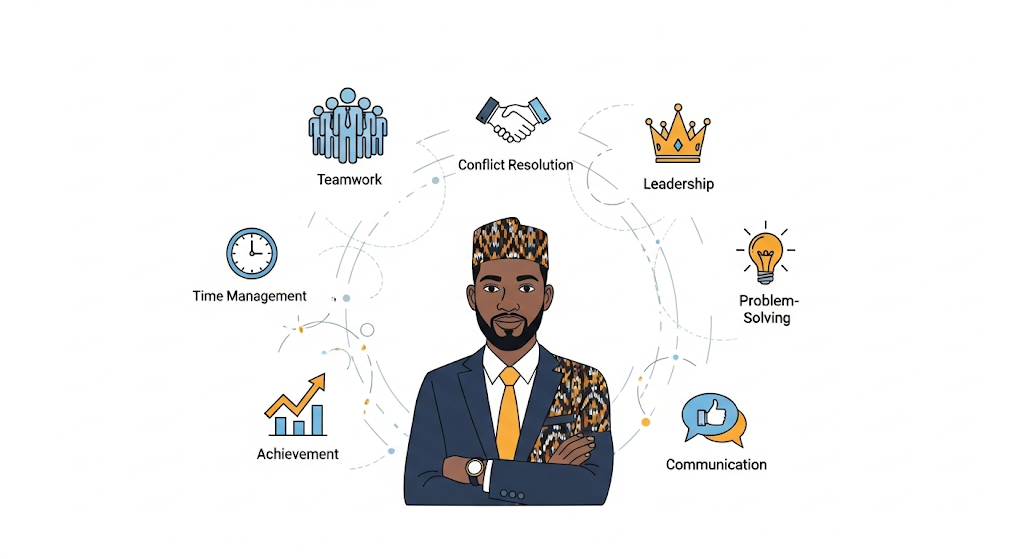
You’ve polished your CV, perfected your “Tell Me About Yourself” pitch, and you walk into your job interview in Lagos or Abuja feeling confident. You’ve memorized your key skills and achievements. But then the interviewer leans in and says, “Tell me about a time you had a conflict with a colleague and how you resolved it.” Suddenly, the interview shifts. They’re no longer asking what you can do; they’re asking what you have done. This is the world of behavioural interview questions, and they are increasingly becoming the standard for top companies across Nigeria.
Nigerian employers are getting smarter. They know that a candidate’s past performance is the best predictor of their future success. It’s no longer enough to simply say you are a “great team player” or “work well under pressure.” They want proof. They want to hear real stories that demonstrate your skills in action. Behavioural questions are designed to uncover how you react to specific workplace situations, revealing your personality, problem-solving skills, and cultural fit far more effectively than any hypothetical question ever could.
Failing to prepare for these questions is a critical mistake. A candidate who can’t provide specific examples comes across as inexperienced, unprepared, or worse, untruthful. This guide will serve as your ultimate preparation kit. We will break down the ten most common behavioural questions asked by Nigerian companies and provide you with a powerful framework—the STAR method—along with detailed, locally relevant examples to help you craft compelling answers that showcase your true value.
The Secret Weapon: Mastering the STAR Method
Before we dive into the questions, you need to understand the only tool you’ll need to answer them perfectly: the STAR method. It is a simple, structured way to tell a compelling story about a professional experience. Every single one of your answers should follow this format.
-
- S – Situation: Briefly describe the context. Where were you working, and what was the situation or challenge you were facing? (1-2 sentences)
- T – Task: What was your specific responsibility? What was the goal you were tasked with achieving? (1 sentence)
- A – Action: Describe the specific actions you took to address the situation and complete the task. This is the most detailed part of your answer. Use “I” statements to focus on your personal contribution.
–
- R – Result: What was the outcome of your actions? Quantify your results whenever possible using numbers, percentages, or concrete outcomes. (1-2 sentences)
Using the STAR method prevents you from rambling and ensures your answer is focused, logical, and powerfully demonstrates your competence.
1. “Tell me about a time you had to handle a difficult client or stakeholder.”
What they’re really asking: This question tests your customer service skills, your patience, your professionalism, and your ability to manage relationships under pressure. Can you remain calm and find a solution when someone is dissatisfied?
Example using the STAR method (for a Banking role):
Situation: “In my previous role as a Relationship Manager at GTBank, a high-net-worth client was extremely upset because a significant fund transfer he had initiated was delayed due to a system glitch over a public holiday, and he was facing a penalty from his supplier.”
Task: “My task was to de-escalate the situation, resolve the issue as quickly as humanly possible, and, most importantly, retain the client’s trust in the bank.”
Action: “First, I actively listened to his frustrations without interrupting, acknowledging his anger and apologizing sincerely for the inconvenience. I assured him I would take personal ownership of the problem. I immediately contacted our central operations unit in Lagos, using my personal relationships there to get the issue prioritized. I kept the client informed with hourly updates via phone calls so he wouldn’t feel left in the dark. While operations worked on the transfer, I simultaneously liaised with the receiving party’s bank to explain the situation, helping to mitigate the penalty he was facing.”
Result: “The transfer was successfully processed the following morning. The client was so appreciative of the constant communication and personal attention that not only did he remain with the bank, but he also increased his portfolio with us by 20% three months later. He cited the way we handled the crisis as his main reason for his increased confidence in our services.”
2. “Describe a time you had a conflict with a colleague.”
What they’re really asking: Are you a team player? How do you handle interpersonal disagreements? This question assesses your emotional intelligence, communication skills, and ability to collaborate.
Example using the STAR method (for a Tech role):
Situation: “On a major software development project, a senior developer and I had a strong disagreement. He insisted on using a familiar but older coding framework, while I argued for a newer, more efficient one that I believed would be better for the project’s long-term scalability.”
Task: “My goal was to resolve our disagreement professionally and ensure we chose the best technical solution for the company, without creating lasting friction within the team.”
Action: “Instead of arguing in our team meetings, I asked him for a one-on-one discussion. I started by acknowledging his experience and expertise with the older framework. Then, instead of just stating my opinion, I presented objective data. I created a small proof-of-concept demonstrating the performance benefits of the new framework and presented a report with case studies of other Nigerian tech companies that had successfully made a similar switch. I suggested we could work together to mitigate the learning curve for the rest of the team.”
Result: “After reviewing the data, he agreed that the new framework was the superior choice. He appreciated that I had approached him respectfully with evidence rather than just opinion. We ended up co-leading the training for the rest of the team, and the project was delivered successfully, with a 15% improvement in application performance compared to initial projections.”
3. “Tell me about a time you failed.”
What they’re really asking: This is a test of self-awareness, humility, and your ability to learn from mistakes. Are you accountable for your errors, or do you blame others? What did you learn from the experience?
Example using the STAR method (for a Marketing role):
Situation: “Early in my career, I was responsible for launching a social media campaign for a new product. I was very confident in my creative idea and rushed the execution, launching it across all platforms simultaneously without doing a small-scale pilot test first.”
Task: “The campaign’s goal was to generate at least 1,000 leads in the first week. Unfortunately, the messaging didn’t resonate with our target audience in Nigeria, and the engagement was extremely low.”
Action: “The campaign was a failure; we only generated about 20% of our lead target. I immediately took responsibility in our team meeting, presenting the poor results and analyzing what went wrong. I admitted my mistake of not testing the concept with a smaller audience segment first. I then quickly proposed a new, revised campaign based on customer feedback and A/B tested two different ad copies with a small budget.”
Result: “The revised campaign was far more successful and ultimately exceeded our lead generation goals. This failure taught me a crucial lesson about the importance of data and testing over personal assumptions. Since then, I have implemented a mandatory A/B testing phase for every campaign I manage, which has improved our average campaign ROI by over 30%.”
4. “Describe a time you showed initiative or took a leadership role.”
What they’re really asking: Are you a proactive problem-solver, or do you wait to be told what to do? This question assesses your leadership potential and sense of ownership.
Example using the STAR method (for an Operations role):
Situation: “Our company had a manual system for tracking inventory which was inefficient and often led to stock-out situations, especially with goods coming in through the Apapa port.”
Task: “Although it wasn’t part of my core job description, my task was to find a better solution to improve our inventory management and reduce costly delays.”
Action: “On my own time, I researched several affordable inventory management software solutions suitable for SMEs in Nigeria. I chose the top three and created a detailed proposal for my manager, outlining the costs, benefits, and a potential implementation plan for each. I included a cost-benefit analysis that projected we could reduce stock-outs by 80%.”
Result: “My manager was so impressed with the proposal that he gave me the lead to implement a pilot program with one of the solutions. The pilot was a huge success, and the system was rolled out company-wide within six months. The new system ultimately reduced inventory errors by over 90% and improved our order fulfillment time by 40%.”
5. “Tell me about a time you worked under a tight deadline.”
What they’re really asking: How do you handle pressure? Can you prioritize tasks and manage your time effectively when the stakes are high?
Example using the STAR method (for a Consulting role):
Situation: “A major client suddenly moved up a project deadline by a full week, giving us just three days to complete a comprehensive market analysis report that was originally scheduled for two weeks.”
Task: “My task, as the project lead, was to reorganize the team and our workflow to meet this new, seemingly impossible deadline without compromising the quality of the report.”
Action: “I immediately called a team meeting. First, I broke down the entire project into the smallest possible tasks. Then, I prioritized them into ‘must-have’ and ‘nice-to-have’ categories. I reassigned tasks based on each team member’s strengths to maximize efficiency. I cancelled all non-essential meetings for the next three days and personally took on the role of coordinating all the parts to ensure a seamless final document.”
Result: “By focusing only on the critical path and working efficiently, the team was able to complete the report by the deadline. The client was extremely impressed with our ability to deliver a high-quality analysis under such intense pressure, which helped us secure a larger, follow-on project worth over ₦50 million.”
6. “Describe how you handled a significant change at work.”
What they’re really asking: Are you adaptable and resilient? Can you embrace change, or do you resist it? This is crucial in the fast-changing Nigerian business environment.
Example using the STAR method (for an Admin role):
Situation: “My company was acquired by a larger international firm, and we had to transition from using our familiar, local accounting software to their global SAP system. Many of my older colleagues were resistant and anxious about the change.”
Task: “My goal was to not only learn the new system quickly myself but also to support my team members to ensure a smooth transition and maintain department morale.”
Action: “I volunteered to be one of the first to attend the SAP training. After the training, I created a simplified, one-page cheat sheet with the most common functions our department used and distributed it to my colleagues. I also organized informal peer-to-peer practice sessions during our lunch breaks to help the less tech-savvy members of the team get comfortable with the new interface in a low-pressure environment.”
Result: “Our department ended up having the smoothest transition in the entire Nigerian branch. We met all our reporting deadlines during the transition period, and my manager commended me for my proactive support and leadership. The cheat sheet I created was even adopted by other departments.”
7. “Tell me about a time you had to persuade someone.”
What they’re really asking: This question assesses your communication and influencing skills. Can you build a logical, evidence-based argument to win people over?
Example using the STAR method (for a Sales role):
Situation: “I was trying to sell our logistics solution to a major manufacturing company in Ibadan. Their Operations Director was skeptical and loyal to their long-time, albeit less efficient, logistics provider.”
Task: “My task was to persuade him that switching to our solution would provide a significant return on investment, despite the initial costs and hassle of changing providers.”
Action: “Instead of just talking about our features, I spent a week analyzing their specific logistics challenges. I used publicly available data to estimate their current shipping costs and potential losses due to delivery delays. I then built a customized business case, showing a clear projection of how our solution could reduce their delivery times by 30% and save them an estimated ₦15 million annually in fuel and vehicle maintenance costs. I presented this data in a clear, concise proposal.”
Result: “The data-driven approach changed his perspective completely. He saw that I had done my homework and understood his business. He agreed to a trial period, which was highly successful, and they signed a three-year contract two months later. It became one of my biggest accounts.”
8. “Give me an example of a time you had to make a difficult decision.”
What they’re really asking: This question evaluates your judgment, your analytical skills, and your ability to take ownership. How do you reason through complex situations, especially with incomplete information?
Example using the STAR method (for a Management role):
Situation: “During a budget cut, I had to make the difficult decision to cut one of two promising but underperforming projects. Both had potential, but we only had the resources to continue with one.”
Task: “My task was to make an objective, data-backed decision that was in the best long-term interest of the company, and to communicate that decision to the affected teams.”
Action: “I created a decision matrix to evaluate both projects against a set of objective criteria: potential ROI, alignment with company strategy, resource requirements, and market risk. I met with both project teams to gather their insights. Although Project A was a personal favorite of mine, the data clearly showed that Project B had a higher probability of success and a faster path to profitability.”
Result: “I made the tough call to cut Project A and presented my analysis to senior management, who supported the decision. I then worked with the members of the disbanded team to reassign them to roles within Project B and other areas of the company, retaining their talent. The focused resources on Project B allowed it to launch successfully and it became profitable within six months.”
9. “Tell me about a time you worked with a difficult colleague or manager.”
What they’re really asking: Similar to the conflict question, this assesses your professionalism and interpersonal skills. The key here is to answer without being negative or unprofessional.
Example using the STAR method (for any professional role):
Situation: “I was working on a team with a colleague who had a very different work style. I am very structured and plan-oriented, while they were more spontaneous, often missing deadlines which then impacted my own work.”
Task: “My goal was to find a way to work together effectively to meet our team’s deadlines without escalating the issue to our manager.”
Action: “I initiated a private conversation with them. I focused on our shared goal—the team’s success. Instead of blaming them, I framed it as a workflow issue. I said, ‘I think we can improve our process. How about we create a shared project plan with clear mini-deadlines for each of our parts?’ We agreed to a short 10-minute check-in every morning to sync up on our progress.”
Result: “This simple change in communication and structure made a huge difference. They started meeting their deadlines, which allowed me to complete my work on time. Our working relationship improved significantly, and our team’s overall productivity increased.”
10. “Describe a time you went above and beyond your job description.”
What they’re really asking: Are you the type of employee who does the bare minimum, or are you a proactive team member who takes ownership of the company’s success?
Example using the STAR method (for a Customer Service role):
Situation: “A customer called in frustrated because an item they ordered for their wedding, which was in two days, was delivered to the wrong state due to a logistics error.”
Task: “My job was simply to log the complaint and process a refund. However, I knew that a refund wouldn’t solve her immediate problem for the wedding.”
Action: “Going beyond my role, I took ownership of the problem. I first sincerely apologized and assured her I would do everything I could. I spent the next hour on the phone with our logistics partners and located a branch of our store in her actual state. I arranged for the correct item to be dispatched directly from that store via a local delivery service, and I got my manager’s approval to cover the extra delivery cost.”
Result: “The customer received her item the evening before her wedding. She was incredibly grateful and wrote a glowing review on our social media pages that was shared hundreds of times. This single act of going above and beyond not only saved a customer’s special day but also generated significant positive publicity for the company.”
Conclusion: Your Stories are Your Proof
Behavioural interview questions are not designed to trick you; they are designed to get to know the real you. In the Nigerian job market, where trust and proven competence are paramount, your ability to tell compelling, evidence-based stories about your career is your most powerful asset. By preparing your examples and mastering the STAR method, you can walk into any interview with the confidence that you are not just qualified, but you have the proof to back it up. Stop telling them what you can do, and start showing them what you have already done.