The Ultimate Job Hunting Checklist for Final Year Students in Nigeria
The final year of university in Nigeria is a unique triathlon of stress. You’re juggling a demanding project, studying for career-defining exams, and facing the looming, often terrifying, question: “What’s next?” The pressure from family, peers, and your own ambitions can feel immense. It’s easy to feel overwhelmed and decide to push all thoughts of job hunting until after your final paper is submitted or even after your NYSC call-up letter arrives. But the secret to a less stressful transition from student to young professional is to start early and be strategic.
Think of your job hunt not as a separate, future task, but as a parallel module running alongside your final year studies. By breaking down the process into manageable steps spread across your final year, you can build momentum, gain confidence, and significantly increase your chances of landing a great role soon after graduation. This is your ultimate checklist, a semester-by-semester guide designed specifically for the realities of a final-year Nigerian student. Let’s get you ready for the world of work.
Phase 1: The Foundation (First Semester: September – December)
This phase is all about introspection and preparation. Before you can convince an employer of your value, you must first understand and articulate it yourself. This is the groundwork. Don’t skip it.
1. Conduct a Deep Self-Assessment
Before you start browsing job portals, look inward. What do you actually enjoy? What are you good at? What kind of impact do you want to make? Ask yourself critical questions:
- Strengths & Weaknesses: What subjects or tasks come naturally to you? Where do you struggle? Be honest.
- Interests & Passions: Beyond your course of study, what fascinates you? Tech? Fashion? Social impact? Finance?
- Work Environment: Do you see yourself in a large, structured multinational corporation, a fast-paced startup, a government agency, or working for yourself?
This isn’t about having a perfect 10-year plan. It’s about getting a sense of direction so you can focus your efforts on industries and roles that genuinely excite you.
2. Craft Your Foundational CV
You need a “master” CV that contains all your experiences, skills, and accomplishments. This is not the CV you will send out for every application, but the source document you will tailor later. If you have zero formal work experience, focus on:
- Projects: Your final year project is a massive source of experience. Detail the research, methodology, and outcomes. Include other significant academic or personal projects.
- Skills: List technical skills (software, programming languages) and soft skills (communication, teamwork, problem-solving).
- Leadership & Volunteer Roles: Detail any positions held in departmental, religious, or social groups. Frame your responsibilities in professional terms (e.g., “Managed a budget,” “Organized an event for 100+ attendees”).
3. Build and Optimize Your LinkedIn Profile
In today’s professional world, not having a LinkedIn profile is like not having a phone number. It is non-negotiable. Your profile should be more than just an online CV.
- Professional Photo: No selfies, no party pictures. A clear, well-lit headshot against a neutral background.
- Compelling Headline: Don’t just put “Student at University of Lagos.” Use keywords. For example: “Final Year Mechanical Engineering Student | Aspiring Project Manager | Proficient in AutoCAD & MATLAB.”
- Detailed “About” Section: Write a short summary of your skills, interests, and career aspirations. Think of it as a mini cover letter.
- Start Connecting: Connect with classmates, lecturers, alumni from your university, and professionals in your target industry. Add a personalized note when you send a request.
4. Begin Strategic Skill Acquisition
Look at job descriptions for roles that interest you. What skills are consistently mentioned that you don’t have yet? Your final year is the perfect time to plug one or two of those gaps. Platforms like Coursera, Udemy, and LinkedIn Learning offer countless courses. Focus on high-demand skills like:
- Data Analysis: Proficiency in Microsoft Excel (VLOOKUP, Pivot Tables) is valuable in almost every industry.
- Digital Marketing: Understanding the basics of SEO, content creation, or social media management.
- A Programming Language: Python or JavaScript if you’re leaning towards tech.
- Project Management: A basic certification can show you are organized and results-oriented.
Phase 2: The Action (Second Semester: January – May)
With your foundation in place, it’s time to move from preparation to active engagement. The goal here is to get onto the radar of potential employers.
5. Tailor Your CV and Write Compelling Cover Letters
Never use the one-size-fits-all approach. For every single application, you must tailor your CV. Read the job description carefully and highlight the keywords and required skills. Edit your master CV to emphasize your experiences and projects that match those keywords. Your cover letter is your chance to tell a story and connect the dots for the recruiter. It should briefly explain who you are, why you want to work for that specific company, and how your skills (proven through your projects and experiences) make you a great fit for that specific role.
6. Identify Target Companies and Set Up Job Alerts
Create a spreadsheet of 20-30 companies you’d love to work for. These should be a mix of large corporations, innovative startups, and solid SMEs. Follow them on LinkedIn to stay updated on their activities and job openings. Go to the major Nigerian job portals like Jobberman, MyJobMag, LinkedIn, and Glassdoor and set up alerts for keywords like “Graduate Trainee,” “Entry-level,” “Intern,” and job titles relevant to your field.
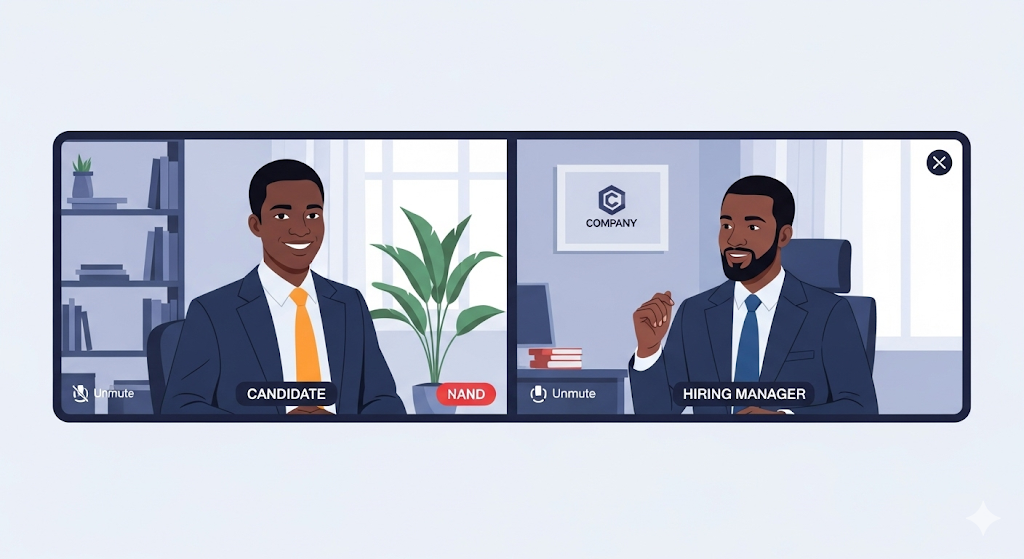
7. Start Practicing for Interviews
Don’t wait until you get an interview invitation to start preparing. Practice is key to overcoming nerves and articulating your thoughts clearly.
- Prepare for Common Questions: “Tell me about yourself,” “What are your strengths and weaknesses?,” “Why do you want to work here?” Prepare thoughtful answers for these.
- Master the STAR Method: For competency-based questions (“Tell me about a time you worked in a team”), learn to structure your answers using the STAR method: Situation (context), Task (your goal), Action (what you did), Result (the outcome).
- Prepare Your Own Questions: Always have 2-3 intelligent questions to ask the interviewer about the role, the team, or the company culture. It shows you are engaged and genuinely interested.
8. Clean Up Your Digital Footprint
Recruiters and hiring managers often search for candidates on social media. What will they find when they search for your name? Go through your public profiles on Instagram, Twitter, and Facebook. Remove any unprofessional photos, controversial comments, or anything you wouldn’t want a potential boss to see. Your online persona should align with the professional image you want to project.
Phase 3: The Transition (Final Exams to NYSC Mobilization)
This is a high-stakes period. You’re finishing your degree while intensifying your job search. Time management is everything.
9. Aggressively Apply for Graduate Trainee Programs
Many of Nigeria’s top companies in banking, consulting, oil & gas, and FMCG sectors open their graduate trainee program portals during this period. These programs are specifically designed for fresh graduates with little to no experience. They are highly competitive, so apply early and prepare diligently for their aptitude tests and assessment centers.
10. Build a Portfolio of Your Work
For many fields, a portfolio is more powerful than a CV. This is your tangible proof of skill.
- Tech Students: Your GitHub profile should be active. Contribute to open-source projects or upload your personal projects.
- Writers/Communicators: Start a blog on Medium or create a simple website to showcase your writing samples.
- Designers/Architects: A Behance or Dribbble profile is essential. Curate your best academic and personal design projects.
11. Get Your Documents in Order
The application and hiring process can move quickly. Avoid last-minute scrambles by having all your necessary documents scanned and ready in a dedicated folder on your computer and cloud storage.
- Statement of Result (or transcript)
- University ID Card / NIN Slip / Other Government-issued ID
- Birth Certificate
- Passport Photograph (with a professional look)
Phase 4: The Execution (NYSC Year and Beyond)
Whether you’ve landed a job before NYSC or not, this year is a critical part of your early career journey. Make it count.
12. Be Strategic About NYSC
While you don’t always have full control over your posting, think strategically. If you want to work in Lagos’s tech scene, serving in a remote village in another state might be a disadvantage. Use any connections you have to try and get posted to a commercially active state. Once in camp, try to get a Place of Primary Assignment (PPA) that aligns with your career goals, even if it’s a school where you can teach a relevant subject.
13. Treat Your PPA as Your First Job
Even if your PPA is not your dream job, treat it with the utmost professionalism. It is your first real-world work experience. Show up on time, take initiative, build relationships, and document your accomplishments. You can frame this experience powerfully on your CV. For example, a corps member teaching at a school can highlight skills in “curriculum delivery, public speaking, mentoring, and stakeholder management (parents and school admin).”
14. Network Intensely During Service
Your fellow corps members are one of the most valuable networks you will ever build. They will go on to work in every imaginable industry across the country. Build genuine friendships. Also, use your service year to connect with professionals in your host community.
15. Learn to Handle Rejection and Stay Resilient
You will face rejection. You will get “We regret to inform you” emails. It is a normal part of the process. Do not take it personally. Use each rejection as a learning opportunity. Was your CV not tailored enough? Did you flub a specific interview question? Learn, adapt, and keep moving forward. Resilience is perhaps the most important skill for a Nigerian job seeker.
Conclusion: You Are in Control
Job hunting as a final-year student in Nigeria is a marathon, not a sprint. By following this checklist, you are breaking this marathon down into manageable laps. You are replacing anxiety with action, and uncertainty with a clear plan. The journey from convocation gown to office chair is a challenging one, but it is entirely navigable. Stay organized, be persistent, and never forget the immense value you have to offer. Your hard work over the past four or five years has prepared you for this moment. Now, go and claim your future.